310S Precision Capillary Tubing: Material Properties, Manufacturing Tolerances, and Application Guide
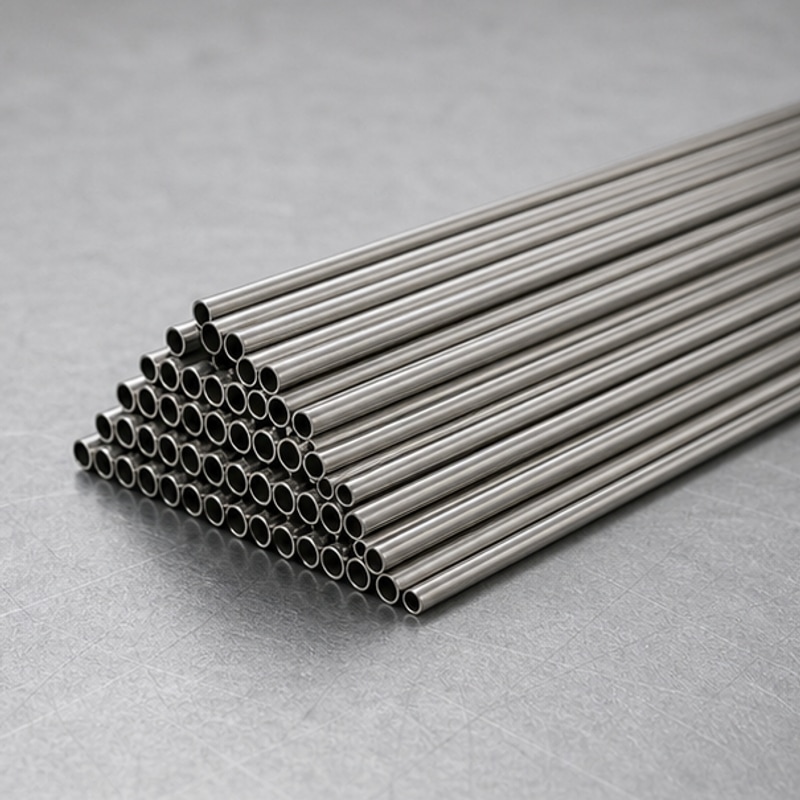
310S precision capillary tubing is a high-alloy austenitic stainless steel product selected for applications requiring sustained oxidation resistance and creep strength at elevated temperatures. Unlike standard 304 or 316L capillary tubing, 310S maintains structural integrity in continuous service up to 1150°C, making it the material of choice for analytical instrumentation, furnace components, and chemical processing systems where thermal cycling and corrosive atmospheres are present. This article provides engineering procurement professionals with factual data on material properties, dimensional tolerances, manufacturing processes, and application-specific considerations for 310S precision capillary tubing.
Chemical Composition and Mechanical Properties of 310S Stainless Steel
310S is a low-carbon variant of Type 310 stainless steel, designed to minimize carbide precipitation during welding and high-temperature exposure. The reduced carbon content (0.08% max) improves intergranular corrosion resistance compared to standard 310. The typical composition range is as follows:
| Element | Weight % (Range) |
|---|---|
| Carbon | 0.08 max |
| Manganese | 2.00 max |
| Silicon | 1.50 max |
| Phosphorus | 0.045 max |
| Sulfur | 0.030 max |
| Chromium | 24.0 – 26.0 |
| Nickel | 19.0 – 22.0 |
| Iron | Balance |
Mechanical properties at room temperature for annealed 310S precision capillary tubing typically include tensile strength of 515–690 MPa, yield strength (0.2% offset) of 205–310 MPa, and elongation in 50 mm of 40–50%. These values provide sufficient ductility for cold drawing operations while maintaining high strength at service temperatures up to 1150°C in continuous exposure. Short-term excursions to 1200°C are possible, but oxidation resistance diminishes above 1150°C due to scale formation.
310S vs 310: Key Differences for High-Temperature Capillary Applications
Engineers often confuse 310 and 310S when specifying capillary tubing. The primary distinction is carbon content: standard 310 allows up to 0.25% carbon, while 310S limits carbon to 0.08% max. For capillary tubing applications involving welding or brazing—common in sensor probes and thermowells—310S is preferred because the lower carbon content reduces sensitization and intergranular corrosion in the heat-affected zone. In non-welded applications where maximum creep strength at the upper temperature limit is critical, standard 310 may offer marginally higher short-term strength, but 310S provides better long-term performance under thermal cycling. For most precision capillary applications, 310S is the safer selection.
Dimensional Specifications and Tolerance Classes for 310S Capillary Tubing
310S precision capillary tubing is typically available in outer diameter (OD) ranges from 0.5 mm to 12.7 mm, with wall thicknesses from 0.05 mm to 2.0 mm. Standard tolerance classes are defined by the cold drawing process and subsequent straightening. Typical OD tolerances are ±0.025 mm for sizes under 3.0 mm OD, and ±0.05 mm for sizes from 3.0 mm to 12.7 mm OD. Wall thickness tolerances are generally ±10% of nominal wall, though tighter controls (±5%) can be achieved with additional drawing passes. Length tolerances for cut-to-length pieces are typically ±0.5 mm for lengths under 500 mm, and ±1.0 mm for longer pieces. Ovality is held to 50% of the OD tolerance band. These tolerances are achievable through multiple cold drawing passes with intermediate anneals.
Manufacturing Process: Cold Drawing, Annealing, Straightening, and Cutting
Production of 310S precision capillary tubing begins with hot-rolled or extruded hollows that are pickled to remove scale. The tube is then reduced through a series of cold drawing operations using tungsten carbide or diamond dies. Each drawing pass reduces the OD and wall by 10–30%, depending on the starting geometry and required final dimensions. Between passes, the tubing undergoes solution annealing at 1040–1120°C followed by rapid quenching to restore ductility and dissolve any precipitated carbides. After achieving the final size, the tubing is straightened using multi-roll or rotary straighteners to meet straightness requirements (typically 0.5 mm per meter). Cutting is performed by abrasive sawing, laser cutting, or mechanical shearing, depending on wall thickness and end finish requirements. For precision applications, deburring and end conditioning are performed to ensure clean, square ends.
Seamless vs Welded 310S Capillary Tubing: Selection Criteria
Both seamless and welded manufacturing routes are available for 310S capillary tubing. Seamless tubing is produced from solid bar or hollows and offers uniform wall thickness and no weld seam, which is critical for high-pressure or corrosive fluid handling. Welded tubing is formed from strip and longitudinally welded, then cold drawn to size. For 310S, welded tubing is typically used in applications where the weld zone is not exposed to aggressive media or where post-weld annealing eliminates the heat-affected zone. Seamless 310S tubing is preferred for analytical instrumentation, thermocouple sheaths, and chemical injection lines where leak integrity is paramount. Welded 310S can be a cost-effective alternative for non-critical structural or protective tubing applications, provided the weld is fully penetrated and the tube is subsequently drawn to close tolerances.
Corrosion Resistance and Maximum Service Temperature
310S precision capillary tubing offers excellent resistance to oxidation and sulfidation in high-temperature environments. The high chromium and nickel content provides a protective oxide scale that resists spalling under thermal cycling. In continuous service, 310S is rated for use up to 1150°C in air; intermittent service can reach 1200°C. In carburizing or reducing atmospheres, the maximum service temperature may be lower—typically 1000–1050°C—due to potential carbide formation or loss of protective scale. Aqueous corrosion resistance is similar to 316L in many environments, though 310S is more resistant to nitric acid and less resistant to reducing acids such as hydrochloric. For capillary tubing exposed to both high temperature and corrosive condensates, 310S provides a balance of properties not achievable with 304 or 316L.
Industry-Specific Applications for 310S Precision Capillary Tubing
Common applications include thermocouple sheaths and temperature sensor probes in industrial furnaces and kilns; sample lines for process gas analyzers in petrochemical plants; capillary columns and transfer lines in gas chromatography; and injection tubing for chemical dosing in high-temperature reactors. In the medical device sector, 310S is used in endoscopic instruments and surgical probes where sterilization at high temperatures is required. For analytical instrumentation OEMs, 310S capillary tubing provides dimensional stability and corrosion resistance in heated sample pathways. The material is also specified for exhaust gas sampling systems in emissions monitoring equipment operating above 800°C.
Quality Control and Inspection Protocol for 310S Capillary Tubing
Inspection of 310S precision capillary tubing includes dimensional verification using laser micrometers and air gauges, with statistical process control data provided per lot. Mechanical testing (tensile, hardness, flattening, and flaring) is performed on representative samples. For seamless tubing, ultrasonic or eddy current testing is applied to detect longitudinal and transverse defects. Chemical composition is verified by optical emission spectrometry or combustion analysis. Surface finish is measured using profilometry, with typical Ra values of 0.4–0.8 μm for drawn tubing. For high-purity applications, internal cleanliness is assessed via solvent flush and particulate count. Certificates of conformance with mill test reports (EN 10204 3.1 or 3.2) are provided upon request.
Procurement Checklist for 310S Precision Capillary Tubing
When specifying 310S precision capillary tubing, confirm the following: material grade (310S per ASTM A269 or A213), OD and wall dimensions with tolerance class, length and end condition (cut, deburred, chamfered), surface finish requirement (drawn, polished, or bright annealed), straightness tolerance, and any supplementary testing (hydrostatic, eddy current, or helium leak). Specify whether seamless or welded construction is required. For high-temperature applications, request a solution-annealed condition. Provide the expected service temperature range and atmosphere (oxidizing, reducing, carburizing) so the supplier can confirm suitability. Always request a mill test report for traceability.
For more information about 310S precision capillary tubing, contact Healsmed’s engineering team with your material grade, drawing, tolerance requirements, and quantity. Submit inquiries through the Healsmed website for prompt technical review and quotation.
Conclusion
310S precision capillary tubing offers a reliable solution for high-temperature and corrosive environments where standard stainless grades are insufficient. Its combination of oxidation resistance, creep strength, and fabricability makes it suitable for demanding applications in analytical instrumentation, chemical processing, and industrial heating. Understanding the material properties, dimensional tolerances, and manufacturing options is essential for selecting the right tubing for your specific operating conditions.
When sourcing 310S capillary tubing, work with a supplier that can provide documented traceability, dimensional certification, and application engineering support. Proper specification and quality control ensure that the tubing performs as expected over its service life, reducing downtime and replacement costs. Healsmed supplies 310S precision capillary tubing to global OEMs with consistent dimensional accuracy and material integrity.

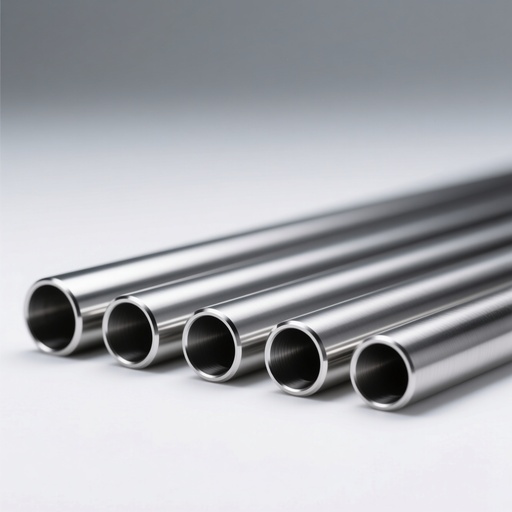
Healsmed
Leading Stainless Steel Capillary Tube Factory. 1,400+ standard sizes IN STOCK & ready to ship worldwide! High precision, factory-direct price.