310S Thin Wall Capillary Tube: Material Properties, Manufacturing Tolerances, and Application Guide
When application requirements demand high-temperature strength and oxidation resistance in a lightweight, compact form factor, the 310S thin wall capillary tube becomes a material of choice for engineers in process instrumentation, heat treatment, and emission monitoring. This austenitic stainless steel grade offers superior creep resistance and scale resistance up to 1100°C, while the thin wall geometry minimizes thermal mass and enables tighter bundle configurations. However, specifying and procuring 310S thin wall capillary tubing requires careful attention to material properties, dimensional tolerances, and manufacturing constraints to avoid performance issues in service.
Chemical Composition and Mechanical Properties of 310S
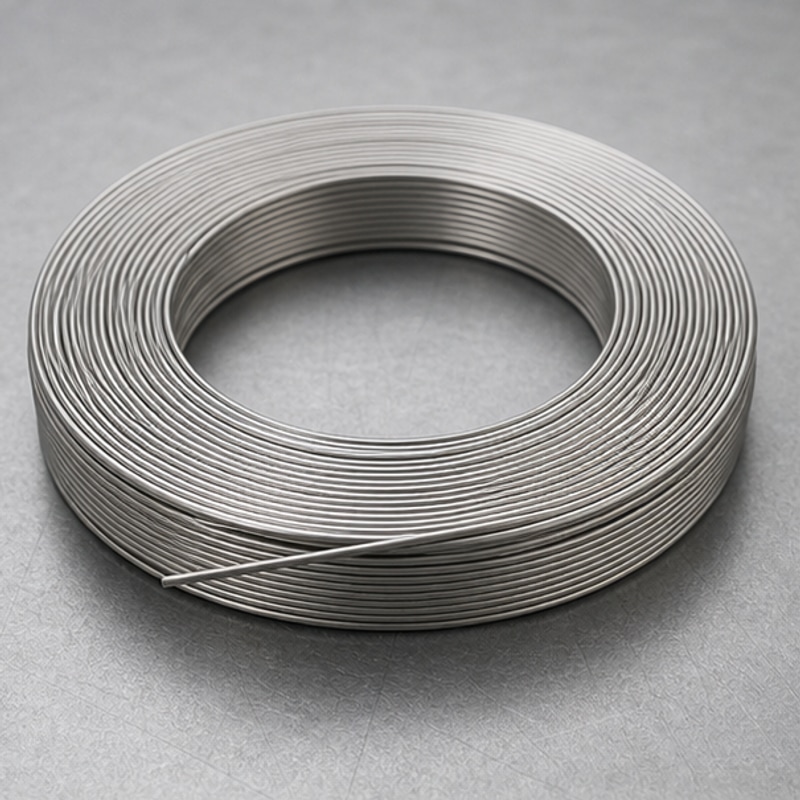
310S is the low-carbon variant of 310 stainless steel, with a maximum carbon content of 0.08% compared to 0.25% for standard 310. This reduction minimizes carbide precipitation during welding and high-temperature exposure, preserving corrosion resistance. The nominal composition includes 24–26% chromium and 19–22% nickel, which provides a stable austenitic structure and a protective chromium oxide scale up to 1100°C. Typical mechanical properties for annealed 310S capillary tubing include a tensile strength of 515 MPa minimum, yield strength of 205 MPa minimum, and elongation of 40% in 50 mm. These values ensure sufficient ductility for bending and flaring operations, even at wall thicknesses below 0.1 mm.
310S vs 310: Key Differences for High-Temperature Capillary Applications
For capillary tubing exposed to cyclic thermal loading or where welding is part of the assembly, 310S is preferred over standard 310. The lower carbon content reduces the risk of sensitization and intergranular corrosion in the heat-affected zone. In thin wall sections, where the tube wall acts as a heat sink during welding, the difference is critical: 310S maintains ductility and corrosion resistance, while standard 310 may become brittle or susceptible to cracking after multiple thermal cycles. For applications such as thermocouple sheaths or sample lines in combustion environments, 310S provides longer service life without compromising mechanical integrity.
Dimensional Specifications and Tolerance Classes for Thin Wall Tubing
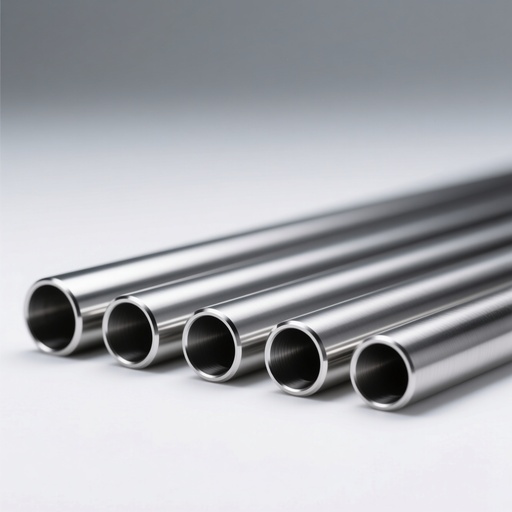
Healsmed supplies 310S thin wall capillary tubes in outer diameters ranging from 0.5 mm to 12.7 mm, with wall thicknesses from 0.05 mm to 2.0 mm. Standard OD tolerances are ±0.025 mm for diameters under 6 mm, and ±0.05 mm for larger sizes. Wall thickness tolerances typically follow ASTM A269 or A213 standards, with a nominal tolerance of ±10% for walls above 0.2 mm, and ±15% for walls below 0.2 mm. For thin wall tubes, ovality control is paramount: maximum ovality is specified as 2% of the nominal OD, though tighter controls can be negotiated for precision assemblies.
| OD Range (mm) | Standard OD Tolerance (mm) | Wall Thickness Range (mm) | Wall Tolerance | Max Ovality (% of OD) |
|---|---|---|---|---|
| 0.5 – 3.0 | ±0.025 | 0.05 – 0.50 | ±15% (wall < 0.2 mm), ±10% (wall ≥ 0.2 mm) | 2% |
| 3.1 – 6.35 | ±0.025 | 0.10 – 1.00 | ±15% (wall < 0.2 mm), ±10% (wall ≥ 0.2 mm) | 2% |
| 6.36 – 12.7 | ±0.050 | 0.20 – 2.00 | ±10% | 2% |
Manufacturing Process Challenges for 310S Thin Wall Capillary Tubes
Producing thin wall capillary tubing from 310S presents specific challenges. The alloy’s high work-hardening rate requires careful control of cold drawing parameters to avoid excessive wall thinning or surface cracking. For wall thicknesses below 0.15 mm, multiple annealing passes are necessary to restore ductility between reductions. The thin wall geometry also increases the risk of collapse during cutting and handling; Healsmed uses precision abrasive cutting with controlled feed rates and deburring processes to maintain roundness. Ovality is monitored at each drawing stage using laser micrometers, and tubes are straightened using multi-roll straighteners to minimize residual bending stresses.
Corrosion Resistance and Oxidation Behavior in Service
310S thin wall capillary tubing exhibits excellent resistance to oxidation and scaling in air up to 1100°C, and good resistance in sulfur-containing atmospheres up to 1000°C. The high chromium and nickel content also provides resistance to carburization and nitriding, making it suitable for heat treatment furnace components and gas sampling probes. In aqueous environments, 310S offers moderate resistance to general corrosion, though it is not recommended for chloride-rich environments where pitting or stress corrosion cracking may occur. For applications involving alternating oxidizing and reducing conditions, the thin wall geometry reduces thermal stress gradients, extending component life.
Industry-Specific Applications for 310S Thin Wall Capillary Tubing
The combination of high-temperature strength and thin wall geometry makes 310S capillary tubing a practical choice for several specialized applications:
- Thermocouple sheaths – Thin wall 310S provides fast thermal response while protecting thermocouple wires in furnaces and exhaust streams up to 1100°C.
- Gas analysis sample lines – In emission monitoring and process gas chromatography, 310S capillary tubes maintain sample integrity at elevated temperatures without catalytic effects.
- Heat treatment instrumentation – Capillary tubes for temperature probes and pressure sensing in vacuum furnaces benefit from the alloy’s low outgassing and oxidation resistance.
- Medical device components – For devices requiring sterilization at high temperatures, such as endoscopic instrument channels, 310S offers dimensional stability and biocompatibility.
Quality Control and Inspection Protocol
At Healsmed, each lot of 310S thin wall capillary tubing undergoes dimensional inspection using air gauging and laser micrometers, with data logged for traceability. Mechanical properties are verified via tensile testing per ASTM E8 on representative samples from each heat. Surface finish is inspected using borescopes for internal cleanliness, and eddy current testing is applied for seam-free seamless tubes. For thin wall tubes, collapse testing under vacuum is performed on a sampling basis to ensure wall integrity. Certifications include material test reports per EN 10204 3.1 or 3.2, as specified.
| Inspection Parameter | Method | Acceptance Criteria |
|---|---|---|
| OD and wall thickness | Air gauge, laser micrometer | Per agreed tolerance class |
| Ovality | Rotary laser scan | ≤ 2% of nominal OD |
| Surface defects | Visual, borescope (ID) | No scratches > 10% wall depth |
| Mechanical properties | Tensile test (ASTM E8) | Per ASTM A213/A269 |
| Collapse resistance | Vacuum test | No collapse at 0.5 bar differential |
Procurement Checklist for 310S Thin Wall Capillary Tubing
When specifying 310S thin wall capillary tubing, include the following in your request: material grade and condition (annealed, cold drawn), OD and wall dimensions with tolerances, length (cut-to-length or random coils), surface finish requirements (e.g., bright annealed, pickled), and any special testing or certification needs. For thin wall tubes, specify the allowable ovality and end condition (square cut, deburred). Provide the intended operating temperature and environment to allow the supplier to confirm grade suitability. Healsmed recommends reviewing the drawing for tight tolerances that may affect manufacturability, especially for walls below 0.1 mm.
For more information about 310S thin wall capillary tube, contact Healsmed’s engineering team with your material grade, drawing, tolerance requirements, and quantity. Submit inquiries through the Healsmed website for prompt technical review and quotation.
Conclusion
310S thin wall capillary tubing offers a reliable solution for applications requiring high-temperature strength, oxidation resistance, and compact design. The low-carbon grade provides improved weldability and resistance to sensitization, making it suitable for cyclic thermal exposure and welded assemblies. Successful procurement depends on clear specification of dimensional tolerances, ovality limits, and manufacturing constraints, particularly for wall thicknesses below 0.2 mm where handling and cutting risks increase.
Engineers evaluating 310S thin wall capillary tubing should consider the balance between wall reduction for thermal performance and the mechanical robustness needed for installation and service. Working with a supplier who understands thin wall manufacturing challenges—such as collapse control, ovality management, and surface integrity—can reduce rejection rates and ensure consistent quality in critical instrumentation and process lines.

Healsmed
Leading Stainless Steel Capillary Tube Factory. 1,400+ standard sizes IN STOCK & ready to ship worldwide! High precision, factory-direct price.