321H Thin Wall Capillary Tube: Material Properties, Manufacturing Tolerances, and Application Guide
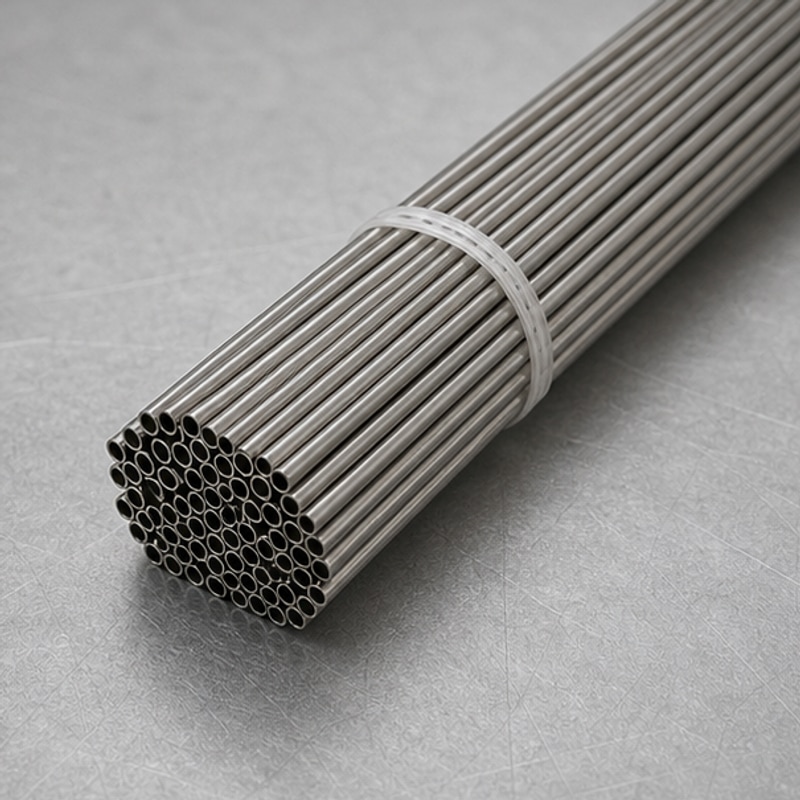
When your design requires a capillary tube that can withstand sustained high temperatures while resisting intergranular corrosion, the material choice narrows to stabilized austenitic grades. The 321H thin wall capillary tube addresses exactly this problem: it provides improved creep strength and resistance to sensitization in the 800–1500°F (427–816°C) range compared to standard 321, making it a common selection for heat exchangers, thermocouple sheaths, and high-pressure instrumentation lines in aerospace and chemical processing. Engineers and procurement professionals sourcing this tube need to understand the material specifications, achievable dimensional limits, and the manufacturing controls that ensure a reliable product for their specific assembly.
Applicable Scenarios and Industries
321H thin wall capillary tubes are used where the operating temperature exceeds 500°F (260°C) and where a combination of corrosion resistance and mechanical strength is required. Typical applications include:
- Aerospace – pneumatic and hydraulic sensor lines, fuel nozzle components, bleed air ducts.
- Chemical and petrochemical processing – heat exchanger U-tubes, thermowell sheaths, sampling lines.
- Power generation – superheater and reheater tubes in thermal plants.
- Instrumentation – capillary tubing for pressure transmitters, gas chromatography columns.
The higher carbon content of 321H (0.04–0.10%) stabilizes the material against chromium carbide precipitation during prolonged exposure at elevated temperatures, making it more reliable than 304H or 316H in cyclic thermal service.
Material Grades and Designations
321H is defined under several standards. The most referenced specifications for capillary tube are:
| Standard | Grade | Key Difference |
|---|---|---|
| ASTM A269 | 321 / 321H | Seamless and welded tube – capillary sizes are typically drawn as seamless to meet tight tolerances. |
| ASTM A213 | TP321H | Boiler, superheater, and heat-exchanger tube – covers higher wall thickness ranges. |
| EN 10216-5 | 1.4878 (X6CrNiTi18-10 / X7CrNiTi18-10) | European designation – carbon range 0.04–0.10% for H version. |
Compared to 316Ti, 321H offers similar stabilisation but with slightly lower resistance to pitting corrosion in chloride environments. For capillary tubes exposed to temperatures above 800°F, 321H is often preferred over 304H because of its titanium stabilisation.
OD, ID, Wall Thickness, and Length Considerations
For thin wall capillary tube, the wall-to-diameter ratio is small. Typical dimensions available in the market include:
- Outer diameter (OD): 0.5 mm to 6 mm (0.020″ to 0.250″)
- Wall thickness: 0.10 mm to 1.00 mm (0.004″ to 0.040″)
- Length: supplied in straight lengths up to 6 m (20 ft) or coiled to longer lengths, depending on drawing and manufacturing limits.
The ID is derived from OD minus twice the wall thickness. For very thin walls (below 0.15 mm), the stiffness and collapse resistance become critical – these must be evaluated against the application’s pressure and temperature requirements. Length tolerances and straightness are typically agreed upon between buyer and supplier at quotation stage.
Tolerances
Dimensional tolerances for 321H thin wall capillary tube depend on the diameter, wall thickness, and the manufacturing process (cold drawn, annealed, straightened). Industry-common ranges are shown below, but note: exact values should be specified on the drawing and agreed with the supplier.
| Parameter | Typical Tolerance (mm) | Condition |
|---|---|---|
| OD (±) | 0.05 – 0.10 | For OD ≤ 3 mm; larger OD tolerances may be wider. |
| Wall thickness (±) | 0.02 – 0.05 | Thinner walls require tighter control; depends on drawing. |
| Length (±) | +5 / 0 mm | For cut lengths under 1 m; longer lengths have proportional tolerances. |
| Straightness | 0.5 mm/m | Typical for straightened capillary; exact value per agreement. |
It is important to specify whether tolerances apply to the annealed or full-hard condition, as drawing operations alter dimensions.
End Condition and Burr Control
Capillary tubes often require cut ends free of burrs to prevent flow obstruction or seal damage. Common end finishes include:
- Square cut – 90° ± 1° with deburred ID and OD (bevel optional).
- Chamfered – for easier fitting insertion.
- Specified burr height – typical maximum 0.05 mm (0.002″) for precision applications.
For very thin walls (below 0.3 mm), deburring must be performed carefully to avoid wall deformation. The buyer should state the acceptable burr height and whether cleaning after cutting is required.
Surface Finish and Cleanliness
321H thin wall capillary tube can be supplied in several surface conditions:
- Bright annealed (BA) – smooth, oxide-free surface, typical for clean assemblies.
- Pickled and passivated – removes heat tint; common for general industrial use.
- Mechanically polished – specified where low friction or visual appearance is critical.
Surface roughness (Ra) can be controlled down to 0.4 µm for BA, or as low as 0.2 µm with additional processing. Cleanliness requirements (e.g., degreased, oxygen-cleaned) must be explicitly stated – standard mill cleaning is not sufficient for oxygen service or medical gas lines.
Inspection Documentation
To verify conformance, the following documents are typically requested with each shipment of 321H capillary tube:
- Material test certificate per EN 10204 Type 3.1 or 3.2 – shows chemical composition and mechanical properties of the heat.
- Dimensional inspection report – records OD, wall thickness, length, and ovality for each lot.
- Hydrostatic or pneumatic test report – if the tube is pressure-rated (per ASTM A269 optional requirement).
- Surface finish measurement – Ra value and method (e.g., stylus profilometer).
For critical applications, additional non-destructive examination (eddy current, ultrasonic) may be specified. The buyer should confirm which standards the supplier can certify to.
Packaging Considerations
Thin wall capillary tubes are susceptible to bending, scratching, and contamination. Typical packaging includes:
- Individual plastic sleeve or spiral wrap for each tube.
- End caps or foam plugs to protect cut ends.
- Bundled in wooden or cardboard crates for straight lengths; coiled tubes are wound on spools with interleaving layers.
- Clearly labelled with material grade, heat number, dimensions, and quantity.
If the tube is required for cleanroom assembly, specify double bagging and certification of cleanliness.
RFQ Information Checklist
To receive an accurate quotation for 321H thin wall capillary tube, include the following details:
- Drawing or sketch with OD, ID, wall thickness, length, and tolerances.
- Material grade: 321H (specify standard, e.g., ASTM A269 or A213).
- Quantity (pieces or meters).
- Surface finish and cleanliness requirements (Ra, degreasing, etc.).
- End condition (square, chamfered, burr limit).
- Inspection documentation needed (cert type, dimensional report, test reports).
- Any special packaging or labelling requirements.
This information allows the supplier to evaluate feasibility against their manufacturing process and provide a complete technical offer.
To request a quotation for 321H thin wall capillary tube, submit your drawings, material grade, quantity, tolerance, surface finish, and inspection requirements through the Healsmed website. The engineering team will review and respond with a technical evaluation.

Healsmed
Leading Stainless Steel Capillary Tube Factory. 1,400+ standard sizes IN STOCK & ready to ship worldwide! High precision, factory-direct price.