Stainless Steel Capillary Tube: Technical Guide for Precision Medical and Industrial Applications
Introduction
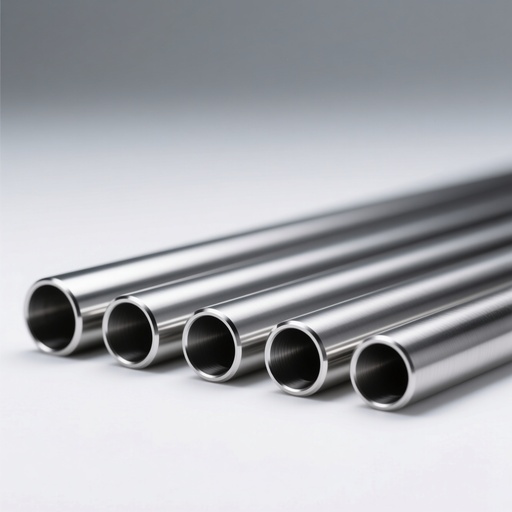
A stainless steel capillary tube is a precision miniature tube with a very small outside diameter, controlled wall thickness, and stable internal bore. In medical, analytical, fluid-control, and miniature mechanical systems, the capillary tube is not only a simple metal passage; it is a functional component that determines flow stability, cleaning reliability, assembly accuracy, and long-term corrosion resistance. For this reason, buyers usually evaluate stainless steel capillary tubing by material grade, dimensional tolerance, internal surface condition, straightness, burr control, and traceability rather than by nominal size alone.
This article provides a technical overview of stainless steel capillary tubes for professional engineering selection. It discusses common stainless steel grades, dimensional parameters, manufacturing routes, quality inspection methods, and typical applications. The keyword may appear in different languages or purchasing contexts, but the engineering intent is generally the same: the customer is looking for a small-diameter stainless steel tube that can deliver precise performance in demanding environments.
Material Selection and Grade Comparison
Material grade is the first technical decision. Austenitic stainless steels are widely used because they combine corrosion resistance, formability, weldability, and availability in fine tube sizes. For medical and laboratory environments, 316L is especially common because its low carbon content and molybdenum addition improve resistance to pitting and intergranular corrosion. 304 is often selected for general instrumentation or industrial use where chloride exposure is limited.
| Grade | Typical Standard Reference | Main Advantage | Common Use Case |
|---|---|---|---|
| 304 | ASTM A269 / ASTM A213 reference families | Good general corrosion resistance and cost efficiency | Instrumentation, general fluid transfer, mechanical sleeves |
| 304L | Low-carbon 304 variant | Improved weldability and reduced carbide precipitation risk | Welded micro assemblies and clean fluid systems |
| 316 | Molybdenum-bearing austenitic stainless steel | Better chloride and pitting resistance than 304 | Laboratory, marine-adjacent, chemical fluid pathways |
| 316L | Low-carbon 316 variant | Preferred for medical, precision, and corrosion-sensitive applications | Medical needles, endoscope components, micro catheters, sensor tubes |
Dimensional Parameters That Control Performance
For a precision capillary tube, outside diameter and wall thickness are only the starting points. The internal diameter controls flow resistance, pressure drop, and compatibility with guide wires or miniature components. Wall thickness influences mechanical strength, bending behavior, and the risk of deformation during cutting, grinding, or assembly. Small changes in internal diameter can produce large differences in flow because laminar flow through a circular tube is strongly affected by bore size.
| Parameter | Engineering Meaning | Why It Matters |
|---|---|---|
| OD | Outside diameter | Determines fit with holes, ferrules, housings, and fixtures |
| ID | Internal diameter or bore | Controls flow rate, guide-wire clearance, and cleaning capability |
| Wall Thickness | Half of the difference between OD and ID | Affects strength, pressure resistance, and bendability |
| Length | Cut tube length or coil length | Influences assembly tolerance, packaging, and downstream processing |
| Straightness | Deviation from a straight axis | Critical for automated assembly and insertion applications |
Manufacturing Route and Surface Quality
Stainless steel capillary tubing is commonly produced through drawing, annealing, cleaning, straightening, and precision cutting. Cold drawing improves dimensional accuracy and surface finish, while annealing restores ductility when the tube requires bending or forming. For medical or analytical applications, the internal surface must be controlled carefully because residues, burrs, or scratches can affect fluid behavior and cleanliness.
Surface quality should be specified in practical terms. A bright outer surface may be sufficient for mechanical sleeves, but fluid-contact parts may require internal cleaning, passivation, or electropolishing. If the tube is used in a medical device supply chain, documentation and lot traceability become as important as the tube itself.
| Process Step | Purpose | Quality Focus |
|---|---|---|
| Tube Drawing | Reduce diameter and improve tolerance | OD/ID consistency, ovality control, surface integrity |
| Annealing | Restore ductility after cold work | Mechanical stability and reduced cracking risk |
| Precision Cutting | Create final component length | Burr control, perpendicularity, clean edges |
| Cleaning | Remove oil, particles, and process residues | Clean bore, low contamination, packaging control |
| Passivation | Enhance chromium oxide passive layer | Improved corrosion resistance and surface reliability |
Technical Applications
The same stainless steel capillary tube can serve very different functions depending on size, finish, and tolerance. In medical devices, it may be used as a needle tube, introducer component, biopsy accessory, endoscope part, or miniature support tube. In industrial and laboratory environments, it may be used for chromatography, sensors, precision dosing, pressure measurement, or gas sampling. The key is to match the tube specification to the actual working condition instead of selecting only by a catalog name.
| Industry | Typical Application | Required Tube Feature |
|---|---|---|
| Medical Devices | Needle components, endoscope accessories, catheter support tubes | 316L material, clean surface, tight tolerance, burr-free cutting |
| Analytical Instruments | Sample transfer, chromatography lines, reagent dosing | Stable ID, smooth bore, corrosion resistance |
| Industrial Sensors | Pressure sensing, thermocouple protection, micro fluid channels | Strength, straightness, thermal stability |
| Automation | Micro sleeves, guide tubes, positioning components | Consistent OD, precise length, machinable ends |
Inspection and Quality Control
Quality control for capillary tubing should combine dimensional inspection, visual inspection, surface evaluation, and documentation review. Because the tube is small, ordinary measurement methods may not be sufficient. Optical measurement, pin gauges, air-flow testing, microscopy, and controlled sampling plans are often used. For critical applications, suppliers should also provide material certificates and process records.
| Inspection Item | Method | Acceptance Focus |
|---|---|---|
| OD and ID | Micrometer, optical measurement, pin gauge, air gauge | Conformance to drawing tolerance |
| Wall Thickness | Calculated from OD/ID or measured by section analysis | Uniformity and pressure capability |
| Burr and Edge Quality | Microscope inspection | No blocking burrs, sharp fragments, or unsafe edges |
| Surface Cleanliness | Visual inspection, solvent cleaning check, particle control | Low residue and clean internal bore |
| Material Traceability | Mill certificate and batch records | Grade confirmation and lot-level control |
Procurement Recommendations
When purchasing stainless steel capillary tubing, a clear drawing is more reliable than a short product name. The drawing or inquiry should specify material grade, OD, ID or wall thickness, length, tolerance, end condition, surface finish, cleaning requirement, packaging method, and annual quantity. If the part will be welded, bent, flared, ground, or assembled into a medical device, those downstream processes should be stated at the quotation stage. This helps the manufacturer choose the correct raw tube, heat treatment, and cutting method.
For prototype projects, engineering teams should test several tolerance levels before locking the specification. A tolerance that is too loose may cause assembly instability, while a tolerance that is unnecessarily tight may increase cost and lead time. The best specification is not always the tightest; it is the one that reliably supports the final function.
Conclusion
A stainless steel capillary tube is a small component with a large influence on product reliability. Proper grade selection, accurate dimensional control, clean internal surfaces, and documented quality inspection are essential for medical, analytical, and industrial systems. For applications involving precision flow, miniature assemblies, or corrosion-sensitive environments, 316L stainless steel capillary tubing is often the preferred starting point. By defining the tube through engineering parameters rather than a generic keyword alone, buyers can reduce trial-and-error, improve assembly yield, and obtain more stable long-term performance.

Healsmed
Leading Stainless Steel Capillary Tube Factory. 1,400+ standard sizes IN STOCK & ready to ship worldwide! High precision, factory-direct price.