Inconel 825 SS Capillary Tubing: Material Properties, Manufacturing Tolerances, and Application Guide
Engineers searching for Inconel 825 SS capillary tubing are typically trying to source a corrosion-resistant, high-nickel alloy tube for instrumentation, chemical processing, or high-temperature fluid handling where 316L stainless steel would fall short. The keyword itself contains a common industry misnomer: Inconel 825 is not a stainless steel grade — it is a nickel-iron-chromium alloy (UNS N08825) often grouped with superalloys. This guide clarifies the material designation, applicable specifications, dimensional and tolerance expectations, end-condition requirements, and the documentation typically requested when procuring Inconel 825 capillary tubing for demanding service environments.
What Inconel 825 Actually Is (and Why the “SS” Label Persists)
Inconel 825 is a nickel-iron-chromium alloy with additions of molybdenum and copper, designated UNS N08825 under the unified numbering system. It is specified under ASTM B423 (seamless and welded nickel-iron-chromium-molybdenum-copper alloy pipe and tube) and, for general corrosion-resistant service, under ASTM B163 for seamless tube. The “SS” in search queries likely reflects the fact that Inconel 825 is frequently used as a drop-in upgrade from 316L or 904L stainless steel in chloride-bearing or reducing-acid environments.
Typical chemical composition ranges (ASTM B423) include:
| Element | Range (wt%) |
|---|---|
| Nickel (Ni) | 38.0–46.0 |
| Chromium (Cr) | 19.5–23.5 |
| Iron (Fe) | 22.0 min (balance) |
| Molybdenum (Mo) | 2.5–3.5 |
| Copper (Cu) | 1.5–3.0 |
| Titanium (Ti) | 0.6–1.2 |
| Carbon (C) | 0.05 max |
These ranges are taken from ASTM B423 and should be confirmed against the specific edition and product form invoked in the purchase order. Mechanical properties depend on condition (annealed, cold-drawn, stress-relieved) and are subject to agreement between purchaser and supplier.
Applicable Scenarios and Industries
Inconel 825 capillary tubing is selected where resistance to both oxidizing and reducing acids, plus chloride stress-corrosion cracking, is required. Typical applications include:
- Chemical process instrumentation and impulse lines handling sulfuric or phosphoric acid
- Offshore and marine tubing exposed to seawater and chloride-rich atmospheres
- Heat exchangers and condenser tubing in power generation
- Nuclear fuel reprocessing and pickling acid handling
- Downhole and sour gas service where H2S and CO2 coexist
- Pharmaceutical and fine chemical pilot plants requiring high-purity fluid paths
It is not typically specified for implantable medical devices; for those applications, material selection follows ISO 10993 and device-specific standards, and biocompatibility must be evaluated separately.
OD, ID, Wall Thickness, and Length Considerations
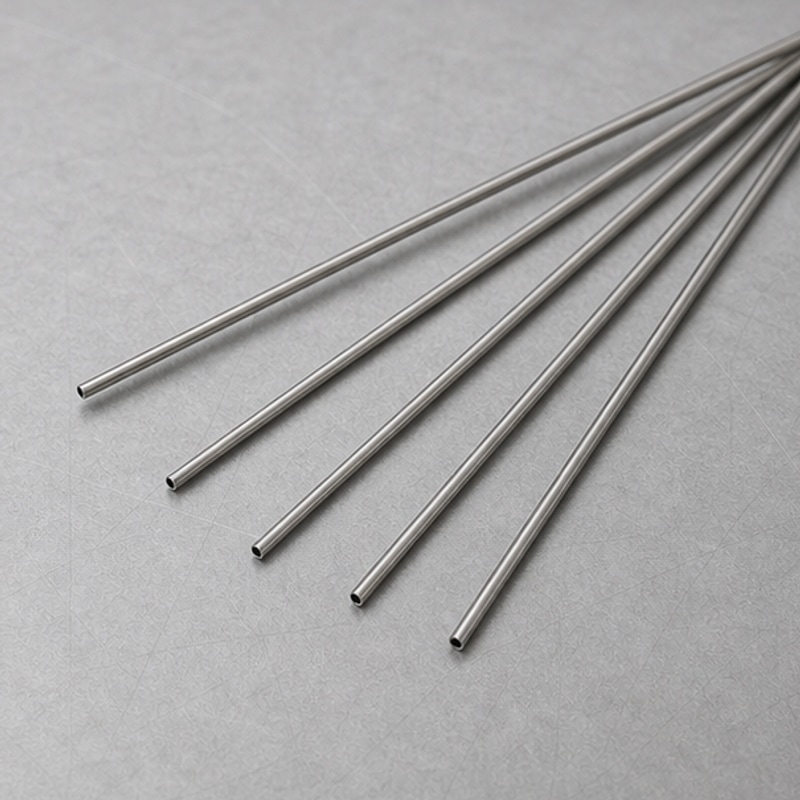
Capillary tubing generally refers to small-diameter, thin-wall tube. For Inconel 825, common procurement ranges include OD from approximately 0.5 mm to 12.7 mm, with wall thicknesses from about 0.05 mm to 1.5 mm. These ranges are indicative and depend on drawing, material condition, process route, and mutual agreement between parties.
Length is typically supplied in random coils, straight lengths, or cut-to-length pieces. For capillary applications, coil lengths of 10 m to 100 m are common, while straight lengths are often limited by handling and shipping constraints. Exact maximum straight length depends on supplier capability and should be confirmed at RFQ stage.
Tolerances for Inconel 825 Capillary Tubing
Capillary tube tolerances are tighter than those for standard pipe or heat-exchanger tube. Typical achievable tolerances for cold-drawn Inconel 825 capillary tubing are shown below. These are general industry ranges and must be verified against the specific mill certificate and drawing.
| Parameter | Typical Range | Notes |
|---|---|---|
| OD tolerance | ±0.05 mm to ±0.10 mm | Depends on OD and drawing |
| ID tolerance | ±0.05 mm to ±0.10 mm | Depends on ID and mandrel condition |
| Wall thickness tolerance | ±10% to ±15% | Depends on wall and process |
| Concentricity | ≤10% of wall | Application-dependent |
| Straightness | 0.5 mm/m to 1.5 mm/m | For straight lengths |
| Length tolerance | ±1 mm to ±3 mm | For cut-to-length |
Tighter tolerances may be achievable through additional drawing passes, centerless grinding, or honing, but this must be confirmed by the supplier based on the specific size and quantity.
End Condition and Burr Control
Capillary tubing for instrumentation and medical-style fluid paths often requires burr-free ends to prevent flow disruption and particulate generation. Common end conditions include:
- Clean-cut with deburring
- Square-cut to length
- Chamfered ends
- Polished ends for high-purity service
Burr height is typically specified as a maximum, for example ≤0.05 mm, but this depends on tube size, wall thickness, and the agreed inspection method. Visual and dimensional inspection of ends is commonly requested.
Surface Finish and Cleanliness
Surface finish requirements for Inconel 825 capillary tubing vary by application. For general chemical service, a standard cold-drawn finish may be acceptable. For high-purity or pharmaceutical applications, internal surface roughness may be specified as Ra ≤0.8 µm or better, with electropolishing or passivation as optional steps.
Cleanliness specifications may include limits on particulate, oil, and grease. These are typically defined by the purchaser and verified through methods such as solvent extraction or particle counting. The supplier should confirm which cleanliness level can be provided and how it is verified.
Inspection Documentation
Inconel 825 capillary tubing is often supplied with the following documentation, depending on order requirements:
- Material test certificate (mill certificate) to ASTM B423 or B163, showing heat number, chemical composition, and mechanical properties
- Dimensional inspection report
- Surface finish report (if specified)
- Cleanliness certificate (if specified)
- Certificate of conformance
Third-party inspection, such as SGS or TÜV, can be arranged if requested. The scope of inspection and documentation must be agreed at the quotation stage.
Packaging Considerations
Inconel 825 capillary tubing is susceptible to mechanical damage and surface contamination during shipping. Typical packaging includes:
- Coils wrapped in protective sleeves or plastic bags
- Straight lengths in wooden or plastic tubes
- End caps or plugs to protect ends
- Desiccant and VCI paper for corrosion protection
- Labeling with heat number, size, and quantity
Packaging requirements should be specified in the purchase order, especially for export shipments or cleanroom applications.
RFQ Information Checklist
To receive an accurate quotation for Inconel 825 capillary tubing, prepare the following information:
- Material grade: Inconel 825 (UNS N08825) or equivalent
- Applicable specification: ASTM B423, B163, or other
- Dimensions: OD, ID, wall thickness
- Tolerances: OD, ID, wall, concentricity, straightness
- Length: coil or straight, cut-to-length tolerance
- End condition: cut, deburred, chamfered, polished
- Surface finish: Ra value or reference standard
- Cleanliness: particulate, oil, grease limits
- Inspection documentation: mill cert, dimensional report, etc.
- Quantity: total length or number of pieces
- Packaging: coil, straight, export, cleanroom
- Delivery location and required date
To request a quotation for Inconel 825 SS capillary tubing, submit your drawings, material grade, quantity, tolerance, surface finish, and inspection requirements through the Healsmed website. The engineering team will review and respond with a technical evaluation.

Healsmed
Leading Stainless Steel Capillary Tube Factory. 1,400+ standard sizes IN STOCK & ready to ship worldwide! High precision, factory-direct price.