Inconel 625 Welded Capillary Tube: Material Properties, Manufacturing Tolerances, and Application Guide
When sourcing Inconel 625 welded capillary tube, engineers and procurement teams are typically looking for a corrosion-resistant, high-strength small-diameter tube that can withstand aggressive media, elevated temperatures, and repeated sterilization cycles without losing dimensional stability. The challenge is not finding the alloy itself—it is finding a supplier who can deliver welded and drawn capillary in tightly controlled OD, ID, and wall thickness, with documented weld integrity, burr-free ends, and inspection records that satisfy both internal quality systems and regulatory audits. This guide addresses the material properties, manufacturing tolerances, and application-specific selection criteria that matter when specifying Inconel 625 welded capillary tube for medical devices, analytical instruments, and high-purity fluid handling systems.
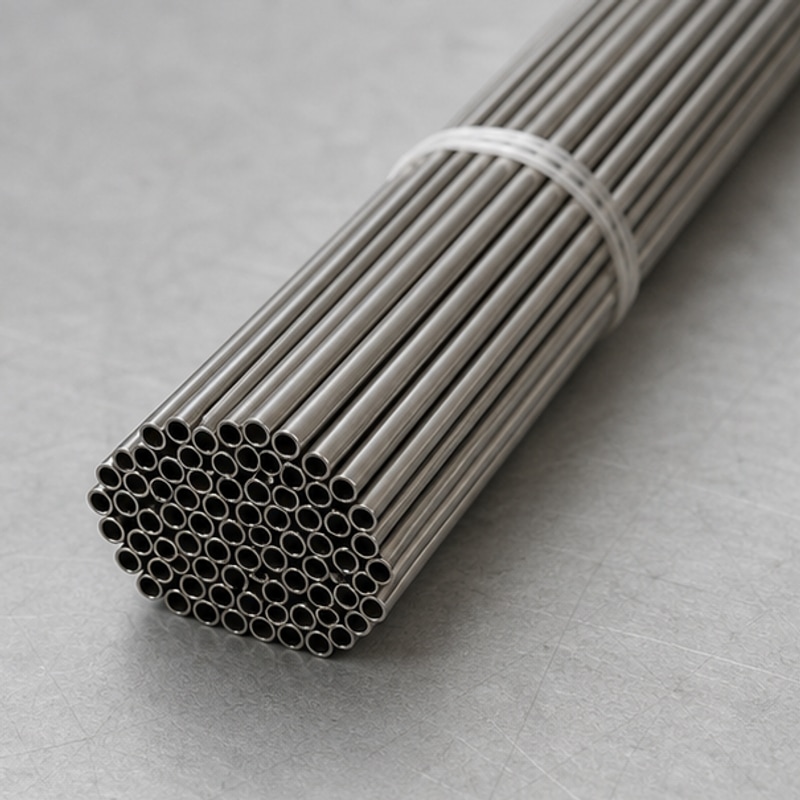
What Is Inconel 625 Welded Capillary Tube?
Inconel 625 is a nickel-chromium-molybdenum alloy designated as UNS N06625 under ASTM B444 and ASTM B704 for seamless and welded tube respectively. It is not a single-grade material in the same sense as 304 or 316L stainless steel; it is a nickel-based superalloy that derives its strength from the combination of molybdenum and niobium in a nickel-chromium matrix. Welded capillary tube is produced by forming strip into a tubular shape, welding the seam (typically via TIG or laser), and then drawing the tube through dies to achieve final dimensions and surface finish.
The welded-and-drawn route offers several practical advantages for capillary dimensions: it can produce very long continuous lengths, allows tighter wall thickness control than some seamless routes, and can be cost-effective at small OD. However, the weld seam remains a feature that must be controlled and inspected. Buyers should specify whether the weld seam is acceptable in the as-welded condition or whether it must be cold-worked and annealed to the point where it is metallurgically bonded and no longer a distinct discontinuity.
Applicable Scenarios and Industries
Inconel 625 welded capillary tube is selected when stainless steels such as 316L do not provide sufficient resistance to pitting, crevice corrosion, or high-temperature oxidation. Typical applications include:
- Medical device fluid pathways requiring resistance to saline, contrast media, or cleaning agents
- Analytical instrumentation tubing for HPLC, GC, and mass spectrometry where metal ion leaching must be minimized
- High-purity gas and liquid sampling lines in semiconductor and aerospace test benches
- Downhole and subsea capillary lines for pressure monitoring in oil and gas
- Thermocouple and sensor protection sheaths in exhaust and furnace environments
- Heat exchanger and cooling loop tubing in marine and chemical processing systems
In medical device design, Inconel 625 is often considered when the tube will be exposed to repeated autoclave cycles, hydrogen peroxide vapor, or gamma sterilization, and when the mechanical strength of the capillary must be maintained at small wall thicknesses. It is not inherently a “medical grade” material; suitability for a specific device depends on the finished device’s biocompatibility testing, cleaning validation, and regulatory submission.
Material Grades and Designations
Inconel 625 is covered by several standard designations, and buyers should confirm which one applies to their drawing and quality system:
| Designation | Standard / Specification | Typical Application |
|---|---|---|
| UNS N06625 | ASTM B444 (seamless tube), ASTM B704 (welded tube) | General corrosion-resistant tubing |
| Alloy 625 | Common trade name | Industry reference |
| DIN 2.4856 | EN / DIN designation | European specifications |
| AMS 5581 | Aerospace material specification | Aerospace tubing |
| NACE MR0175 / ISO 15156 | Sour service environments | Oil and gas |
Chemical composition requirements for UNS N06625 are specified in ASTM B444 and B704. Typical ranges include nickel (58.0% min), chromium (20.0–23.0%), molybdenum (8.0–10.0%), and niobium plus tantalum (3.15–4.15%). Carbon is typically limited to 0.10% max, and iron to 5.0% max. These ranges are verifiable against the applicable ASTM standard and should be confirmed on the mill certificate for each heat lot.
Mechanical properties depend on condition. In the annealed condition, typical values include tensile strength around 120 ksi (827 MPa) and yield strength around 60 ksi (414 MPa), with elongation around 30%. Cold-worked capillary may exhibit higher strength and lower elongation. Actual values should be taken from the material test report for the specific lot and condition.
OD, ID, Wall Thickness, and Length Considerations
Capillary tube dimensions are usually specified as OD × ID or OD × wall thickness. For Inconel 625 welded capillary, common size ranges depend on the supplier’s tooling and drawing capabilities. Buyers should not assume a universal range; instead, they should provide the exact OD, ID, and wall thickness required and ask the supplier to confirm feasibility.
Key dimensional considerations include:
- OD: Typically from 0.5 mm to 12 mm for capillary and small-diameter tube, though smaller and larger sizes may be possible depending on tooling.
- Wall thickness: Often 0.05 mm to 1.5 mm. Very thin walls (below 0.1 mm) require careful handling and may have limited straightness.
- ID: Determined by OD minus twice the wall thickness. ID tolerances are often tighter than OD tolerances because flow rate and pressure drop are sensitive to ID variation.
- Length: Can be supplied in random lengths, fixed lengths, or cut-to-length. Coiled lengths are common for small OD. Straight lengths may be limited by shipping and handling.
When specifying, state whether the tube must be straight or coiled, and whether the ID is the critical dimension for flow or the OD is critical for fitting or insertion.
Tolerances for Inconel 625 Welded Capillary Tube
Capillary tube tolerances are tighter than those for standard tubing. The following table provides typical ranges that buyers may encounter, but actual tolerances depend on drawing, material condition, process route, and mutual agreement between parties.
| Parameter | Typical Tolerance Range | Notes |
|---|---|---|
| OD | ±0.02 mm to ±0.10 mm | Tighter for small OD; depends on drawing |
| ID | ±0.02 mm to ±0.08 mm | Critical for flow control |
| Wall thickness | ±5% to ±10% | May be specified as minimum wall |
| Length | ±0.5 mm to ±2 mm for cut lengths | Depends on cutting method |
| Straightness | 0.5 mm to 2 mm per meter | For straight lengths |
| Concentricity | Depends on drawing | May be specified as wall thickness variation |
Tolerances should be specified on the purchase drawing and confirmed by the supplier before production. Over-specifying tolerances can increase cost and lead time without functional benefit.
End Condition and Burr Control
Capillary tube ends are often a source of leaks, particle generation, and assembly problems. Common end conditions include:
- Clean cut: Saw or laser cut with deburring. Burr height should be specified if critical.
- Square cut: End face perpendicular to axis within a specified angle.
- Chamfered: For insertion into fittings or seals.
- Flared or beaded: For specific connection types.
- Sealed or plugged: For pressure testing or contamination control.
Burr control is particularly important in medical and analytical applications where particles can affect flow or contaminate samples. Specify maximum burr height and whether internal and external burrs must be removed. For some applications, electropolishing or passivation may be required after cutting to remove burrs and improve surface finish.
Surface Finish and Cleanliness Requirements
Surface finish affects corrosion resistance, cleanability, and particle retention. For Inconel 625 capillary, typical surface finish requirements include:
- Ra: 0.4 µm to 0.8 µm for general purpose; 0.2 µm or better for high-purity or medical applications.
- ID surface: May require additional honing, electropolishing, or acid cleaning to remove weld scale and drawing lubricants.
- Cleanliness: Specify if the tube must be free of oils, particles, or metallic fines. Cleaning methods may include ultrasonic cleaning, solvent washing, or passivation.
- Weld seam: May require scarfing or planishing to remove weld bead and achieve a smooth ID.
Cleanliness specifications should be agreed upon in writing, including test methods (e.g., particle count, extractable residue) and acceptance criteria.
Inspection Documentation
For Inconel 625 welded capillary tube, buyers should request the following documentation as applicable:
- Material test report (MTR) per ASTM B704 or B444, including chemical composition and mechanical properties
- Dimensional inspection report with actual measurements for OD, ID, wall thickness, and length
- Weld integrity report (e.g., eddy current, ultrasonic, or hydrostatic test) if specified
- Surface finish report (Ra) if specified
- Cleanliness certification if specified
- Certificate of conformance (CoC) to the purchase order
Third-party inspection or specific test reports may be required for regulated industries. Buyers should confirm what documentation the supplier can provide before placing an order.
Packaging Considerations
Capillary tube is susceptible to bending, scratching, and contamination during shipping. Packaging should be specified based on tube size and cleanliness requirements:
- Straight lengths: typically packed in rigid tubes or wooden boxes with end caps and protective wrapping.
- Coils: wrapped in plastic or paper, then boxed or crated.
- Clean tubes: may require double bagging in cleanroom-compatible packaging.
- Identification: each bundle or coil should be labeled with material grade, heat number, dimensions, and quantity.
Buyers should specify whether packaging must be free of sulfur, chlorine, or other contaminants that could affect the tube surface.
RFQ Information Checklist
To receive an accurate quotation for Inconel 625 welded capillary tube, provide the following information:
- Material grade and standard (e.g., UNS N06625 per ASTM B704)
- OD, ID, and wall thickness with tolerances
- Length and whether straight or coiled
- End condition (cut, deburred, chamfered, etc.)
- Surface finish requirement (Ra, ID/OD)
- Cleanliness requirement
- Inspection documentation required (MTR, dimensional report, weld test, etc.)
- Quantity (total length or number of pieces)
- Packaging requirements
- Any additional specifications (e.g., NACE MR0175, AMS 5581)
Providing complete and accurate information reduces back-and-forth and helps the supplier evaluate feasibility and lead time.
To request a quotation for Inconel 625 welded capillary tube, submit your drawings, material grade, quantity, tolerance, surface finish, and inspection requirements through the Healsmed website. The engineering team will review and respond with a technical evaluation.

Healsmed
Leading Stainless Steel Capillary Tube Factory. 1,400+ standard sizes IN STOCK & ready to ship worldwide! High precision, factory-direct price.