321H SS Capillary Tube: Material Properties, Manufacturing Tolerances, and Application Guide
When designing medical devices, analytical instruments, or high-temperature fluid systems that require capillary tubing, engineers often face a material selection challenge: standard 304 or 316L austenitic stainless steels may lack sufficient creep resistance or carbide stability above 500°C. The 321H SS capillary tube addresses this by offering a stabilized stainless steel with controlled carbon content for enhanced high-temperature strength and resistance to intergranular corrosion. This article covers the material properties, manufacturing tolerances, and application considerations for sourcing 321H SS capillary tubing for demanding technical environments.
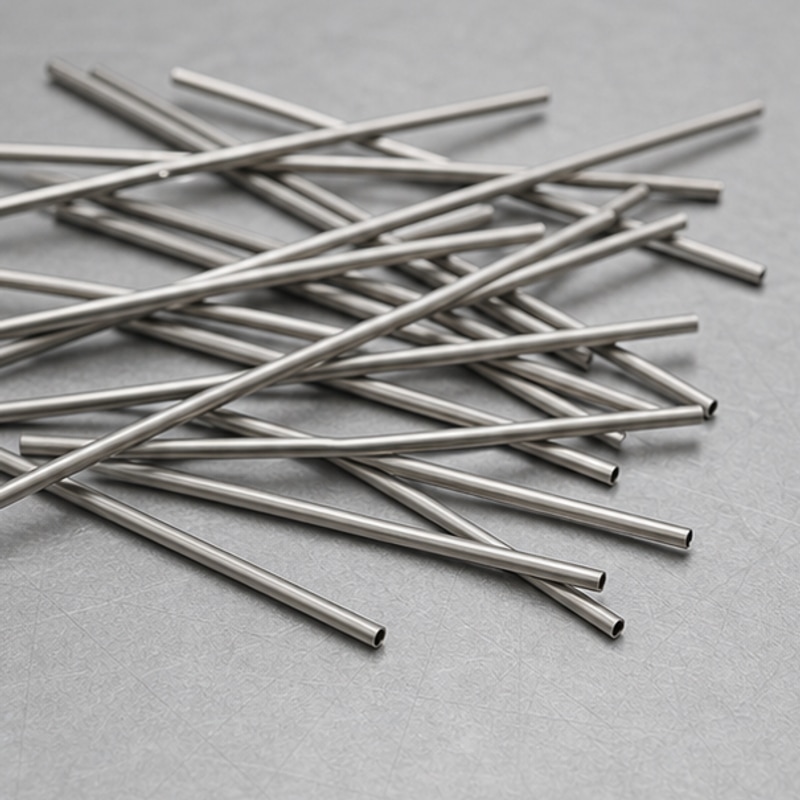
Applicable Scenarios and Industries
321H SS capillary tube is typically selected for applications where the tubing will experience sustained temperatures between 500°C and 800°C, or where thermal cycling could cause sensitization in unstabilized grades. Common industries and use cases include:
- Medical device manufacturing: Sterilization equipment components, surgical tool actuators, and thermal management probes that require exposure to repeated autoclave cycles.
- Aerospace and defense: Hydraulic and pneumatic control lines in engine nacelles, bleed air systems, and fuel metering assemblies.
- Chemical and petrochemical processing: Thermowells, sampling probes, and injection lines for corrosive media at elevated temperatures.
- Analytical instrumentation: Gas chromatography columns, mass spectrometer inlets, and fluid transfer lines requiring high temperature stability and low outgassing.
- Power generation: Instrumentation lines in gas turbines, nuclear reactor monitoring systems, and solar thermal collectors.
321H is not typically specified for cryogenic or sub-zero applications, nor for environments requiring high chloride resistance (where 316L or 904L would be more appropriate).
Material Grades and Designations
321H is a high-carbon variant of Type 321 stainless steel, stabilized with titanium. The key difference between 321 and 321H is the controlled carbon range, which improves high-temperature creep strength. Common designations and equivalents include:
| Standard | Designation |
|---|---|
| ASTM A213 / ASME SA-213 | TP321H |
| ASTM A269 | 321H (seamless and welded) |
| UNS | S32109 |
| EN 10028-7 | 1.4878 (X6CrNiTi18-10, with higher C variant) |
| JIS G 3459 | SUS 321H TB |
Per ASTM A213, the chemical composition for 321H includes: carbon 0.04–0.10 wt%, chromium 17.0–19.0 wt%, nickel 9.0–12.0 wt%, titanium ≥5×C% (minimum 0.70 wt%), with residual elements limited per standard. Mechanical properties at room temperature typically include tensile strength ≥515 MPa and yield strength ≥205 MPa (for tube wall thickness ≤12.7 mm). These values are for annealed condition; actual properties depend on heat treatment and size.
Compared to 304, 316L, 316Ti, or standard 321, 321H offers superior creep rupture strength above 500°C due to its higher carbon content and stable carbide precipitation. For applications below 500°C, 304 or 316L may be more cost-effective.
OD, ID, Wall Thickness, and Length Considerations
Capillary tube is defined by small outer diameter (typically ≤6.35 mm / 0.250 inch). For 321H SS capillary tube, common dimensional ranges include:
- Outer diameter (OD): 0.50 mm to 6.35 mm (0.020″ to 0.250″).
- Wall thickness: 0.10 mm to 1.00 mm (0.004″ to 0.040″), depending on OD and application pressure requirements.
- Inner diameter (ID): Calculated from OD minus 2× wall thickness; ID tolerance is typically derived from OD and wall tolerances.
- Length: Standard random lengths of 1–6 meters, or cut-to-length per drawing (e.g., 100 mm, 500 mm, 1000 mm).
For high-precision applications, the ID tolerance is critical for flow consistency. In such cases, the ID should be specified directly, and the supplier should confirm achievable tolerances based on the manufacturing process (seamless drawn or welded and drawn).
Tolerances
Tolerances for 321H capillary tube depend on the governing standard (ASTM A269, ASTM A213, or customer drawing). Typical tolerance ranges for small-diameter tubing are:
| Parameter | Typical Tolerance (per ASTM A269) |
|---|---|
| OD ≤ 4.76 mm (3/16″) | ±0.05 mm (±0.002″) |
| OD 4.76–12.7 mm | ±0.10 mm (±0.004″) |
| Wall thickness | ±10% of nominal (for wall ≥0.38 mm) |
| Length (cut-to-length) | depends on drawing, material condition, process route, and mutual agreement between parties |
For tighter tolerances (e.g., OD ±0.025 mm, ID ±0.025 mm), special cold drawing and inspection processes are required. These capabilities are available from specialized tubing mills but must be confirmed with the supplier for each specific order.
End Condition and Burr Control
Capillary tube ends must be cleanly cut and deburred to prevent particle entrapment, flow obstruction, or damage to seals during assembly. Common end conditions include:
- Square cut: Perpendicular to tube axis, with burr removed via mechanical deburring or electrochemical processes.
- Deburred ID and OD: Both inner and outer edges are chamfered or radiused to remove sharp edges.
- End preparation for welding: Beveled ends if required for orbital welding or socket weld fittings.
Burr control is especially important for 321H because titanium carbides can create hard, abrasive burrs that are difficult to remove. The end condition should be specified on the drawing, and verification methods (e.g., 10× magnification inspection) should be agreed upon.
Surface Finish and Cleanliness Requirements
321H capillary tube is typically supplied in one of the following surface finishes:
- Annealed and pickled (AP): A matte gray oxide-free surface suitable for general industrial use.
- Bright annealed (BA): A smooth, reflective surface produced by annealing in a controlled atmosphere (hydrogen or dissociated ammonia). BA finish minimizes surface roughness and reduces particle adhesion.
- Electropolished (EP): A mirror-like finish with reduced surface roughness (Ra ≤0.4 µm), often required for medical or ultra-high-purity applications.
Cleanliness requirements depend on the application. For medical device or analytical use, tubing may need to be cleaned to remove oils, particulates, and process residues. Typical standards include:
- Medical-grade cleanliness: Cleaned to specified particle count per surface area (e.g., ≤100 particles/cm² ≥0.5 µm).
- High-purity (HP) cleaning: Degreased, ultrasonically cleaned, and bagged in a cleanroom environment.
It is important to note that 321H is not inherently “medical grade.” Cleanliness and surface finish must be specified by the customer; the supplier should be asked to confirm their ability to meet the required level.
Inspection Documentation
When sourcing 321H SS capillary tube, buyers typically require the following documentation to verify compliance with specifications:
- Material test report (MTR) / EN 10204 3.1 or 3.2: Certifies chemical composition and mechanical properties, traceable to the heat lot.
- Dimensional inspection report: Records OD, ID, wall thickness, and length measurements for each lot or per sample plan.
- Surface finish measurement: Ra or Rz values, if specified.
- Hydrostatic or pneumatic pressure test report: Required for pressure-containing applications per ASTM A213.
- Nondestructive examination (NDE) report: Eddy current or ultrasonic testing, if specified.
All documentation should be reviewed to confirm that the material is TP321H (UNS S32109) per the applicable standard, and that the heat treatment (solution annealed at minimum 1100°C) is noted.
Packaging Considerations
321H capillary tube must be packaged to prevent mechanical damage, corrosion, and contamination during transit. Typical packaging methods include:
- Coiled or straight lengths: Coiled tubing is wound on spools or in bundles; straight lengths are packed in wooden crates or cardboard boxes with foam dividers.
- Protective wrapping: VCI (vapor corrosion inhibitor) paper or plastic film to prevent moisture ingress.
- Cleanroom packaging: Double-bagged in polyethylene, sealed in a cleanroom environment, with desiccant if required.
- Labeling: Each bundle or spool labeled with material grade, heat number, dimensions, and quantity.
For export shipments, packaging should comply with ISPM 15 (wood packaging) and any customer-specific packaging requirements.
RFQ Information Checklist
To ensure an accurate quotation for 321H SS capillary tube, include the following information in your request:
- Material grade: 321H (UNS S32109) per ASTM A213 or A269.
- Dimensions: OD, wall thickness (or ID), length, and tolerances.
- Quantity: Total length (meters or feet) and number of pieces.
- Surface finish: AP, BA, or EP, with Ra value if applicable.
- End condition: Square cut, deburred, beveled, etc.
- Cleanliness level: Standard industrial, medical, or high-purity.
- Inspection requirements: MTR, dimensional report, NDE, etc.
- Packaging: Coiled or straight, cleanroom or standard.
- Delivery schedule and destination.
Providing a complete drawing or specification sheet will help avoid misunderstandings and ensure that the tubing meets your exact requirements.
To request a quotation for 321H SS capillary tube, submit your drawings, material grade, quantity, tolerance, surface finish, and inspection requirements through the Healsmed website. The engineering team will review and respond with a technical evaluation.

Healsmed
Leading Stainless Steel Capillary Tube Factory. 1,400+ standard sizes IN STOCK & ready to ship worldwide! High precision, factory-direct price.