321H Seamless Capillary Tubing: Material Properties, Manufacturing Tolerances, and Application Guide
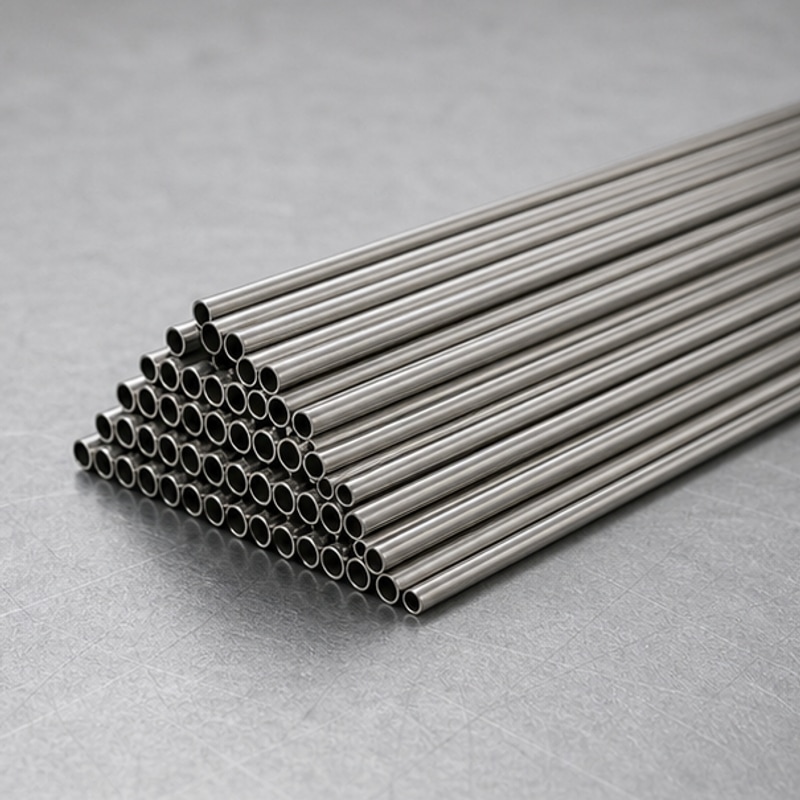
When designing fluidic systems or sensor assemblies for high-temperature environments, standard 304 or 316L stainless steel capillary tubing can suffer from sensitization and intergranular corrosion above 425°C. This is the engineering problem that 321H seamless capillary tubing solves. Stabilized with titanium and controlled for higher carbon content, 321H retains strength and resists carbide precipitation during continuous or cyclic service up to 900°C. If you are sourcing small-diameter tubing for exhaust gas sampling, thermowell probes, or heat exchanger components in petrochemical or power generation equipment, 321H seamless capillary tubing is the material choice that balances creep resistance, corrosion resistance, and dimensional stability.
Applicable Scenarios and Industries
321H seamless capillary tubing is specified where the operating temperature exceeds the range of standard austenitic stainless steels and where intermittent heating and cooling cycles are present. Typical applications include:
- Thermocouple sheaths and temperature sensor probes in furnaces, kilns, and gas turbines
- Sample lines for process gas analysis in refineries and chemical plants
- Heat exchanger tubes for superheated steam or hot corrosive fluids
- Expansion bellows and flexible hose assemblies requiring high-temperature fatigue resistance
- Hydraulic and pneumatic control lines in aerospace engine nacelles and bleed air systems
- Laboratory reactor feed lines operating above 500°C
Industries that rely on 321H capillary tubing include power generation, oil and gas, petrochemical processing, aerospace, and industrial instrumentation. Medical device applications are uncommon for this grade due to its high-temperature focus.
Material Grades and Designations
321H is the high-carbon variant of Type 321 stainless steel. The “H” designation per ASTM A213 indicates a controlled carbon range of 0.04% to 0.10%, which enhances creep strength and rupture life at elevated temperatures compared to standard 321 (carbon ≤ 0.08%). Titanium stabilization (Ti ≥ 5 × C%) prevents chromium carbide formation during welding or service. Relevant specifications include:
- ASTM A213 / ASME SA213 – Standard Specification for Seamless Ferritic and Austenitic Alloy-Steel Boiler, Superheater, and Heat-Exchanger Tubes
- ASTM A269 – Standard Specification for Seamless and Welded Austenitic Stainless Steel Tubing for General Service (applicable for smaller ODs, but A213 is preferred for high-temperature service)
- EN 10216-5 – TC1 (equivalent to 1.4878 for 321H)
Chemical composition (weight %, typical per ASTM A213):
| Carbon | 0.04 – 0.10 |
| Manganese | ≤ 2.00 |
| Phosphorus | ≤ 0.045 |
| Sulfur | ≤ 0.030 |
| Silicon | ≤ 0.75 |
| Chromium | 17.0 – 19.0 |
| Nickel | 9.0 – 12.0 |
| Titanium | ≥ 5 × C% |
Mechanical properties at room temperature (per ASTM A213): tensile strength ≥ 515 MPa, yield strength ≥ 205 MPa, elongation ≥ 35%.
OD, ID, Wall Thickness, and Length Considerations
321H seamless capillary tubing is typically available in outer diameters from 0.5 mm to 6.35 mm (0.020″ to 0.250″), with wall thicknesses from 0.10 mm to 1.65 mm (0.004″ to 0.065″). Inner diameter is determined by the OD minus twice the wall thickness. For high-temperature applications, wall thickness selection must account for creep strength and oxidation allowance rather than just burst pressure. Available lengths depend on the manufacturing route and can range from random mill lengths (3–7 m) to custom-cut lengths per drawing.
Tolerances
Tolerances for 321H seamless capillary tubing depend on whether it is supplied to ASTM A213 or a customer-specific drawing. Typical ranges for small-diameter tubing include:
| Outer diameter | ± 0.05 mm to ± 0.13 mm (depending on OD size and wall ratio) |
| Wall thickness | ± 10% of nominal (or ± 0.03 mm, whichever is greater) |
| Length | +6 mm / -0 mm for cut lengths under 7 m |
| Straightness | depends on drawing, material condition, process route, and mutual agreement between parties |
For precision applications requiring tighter control, tolerances can be negotiated based on the manufacturing process (cold drawing, centerless grinding, or pilgering).
End Condition and Burr Control
Capillary tubing for instrumentation and heat exchanger assemblies requires clean, burr-free ends to avoid flow restriction or particulate contamination. Standard end conditions include:
- Square cut with deburred ID and OD (typical burr ≤ 0.13 mm)
- Chamfered or beveled ends for welding preparation
- Ends capped or sealed to prevent debris ingress
For 321H, care must be taken during cutting to avoid work-hardening and micro-cracking; saw cutting or abrasive wheel cutting followed by mechanical deburring is common. Burr dimensions should be specified on the drawing and verified during inspection.
Surface Finish and Cleanliness Requirements
Surface finish is critical for high-temperature service where oxidation resistance and fatigue life are required. Typical finishes for 321H seamless capillary tubing include:
- Bright annealed (BA) – smooth, oxide-free surface suitable for clean environments
- Pickled (2D or 2B equivalent) – matte finish with a thin passive oxide layer
- Mechanically polished (e.g., 180 grit, 320 grit) for specific aesthetic or friction requirements
Interior surface cleanliness is important for sample lines and hydraulic systems. Tubing can be supplied ultrasonically cleaned, degreased, and nitrogen-purged with end caps. Roughness values (Ra) typically range from 0.4 μm to 1.6 μm for capillary sizes, depending on the process route.
Inspection Documentation
For 321H seamless capillary tubing used in critical high-temperature assemblies, the following documentation is typically required:
- Material test report (MTR) per EN 10204 Type 3.1 or 3.2, showing heat number, chemical composition, and mechanical properties
- Dimensional inspection report with OD, ID, wall thickness, and length measurements
- Hydrostatic or pneumatic pressure test certificate (if specified)
- Non-destructive examination (NDE) report – eddy current or ultrasonic testing per ASTM E213 or E309
- Surface finish measurement report (if Ra value is specified)
All documentation should be traceable to the specific heat and lot number.
Packaging Considerations
321H capillary tubing is susceptible to mechanical damage and corrosion if improperly packed. Typical packaging methods include:
- Individual tubes wrapped in kraft paper or plastic sleeves
- Bundles secured with non-metallic strapping, separated by foam or cardboard dividers
- Wooden crates or corrugated boxes for export shipments
- Desiccant packs and VCI (vapor corrosion inhibitor) paper for long-term storage
For clean-room applications, double bagging with ESD-safe materials is available per request.
RFQ Information Checklist
To ensure an accurate quotation for 321H seamless capillary tubing, include the following details in your request:
- Material grade (321H per ASTM A213 or equivalent)
- Outer diameter and wall thickness (metric or imperial)
- Length per piece and total quantity
- Required tolerances (OD, wall, straightness, cut length)
- End condition (square cut, deburred, chamfered)
- Surface finish (bright annealed, pickled, polished, with Ra if applicable)
- Cleanliness level (standard degreased, ultrasonic cleaned, nitrogen purged)
- Inspection documentation requirements (MTR type, dimensional report, NDE)
- Packaging and shipping requirements
- Any applicable customer drawing or specification
Providing complete information upfront reduces quotation lead time and ensures the tubing meets your design intent.
To request a quotation for 321H seamless capillary tubing, submit your drawings, material grade, quantity, tolerance, surface finish, and inspection requirements through the Healsmed website. The engineering team will review and respond with a technical evaluation.

Healsmed
Leading Stainless Steel Capillary Tube Factory. 1,400+ standard sizes IN STOCK & ready to ship worldwide! High precision, factory-direct price.