321H Seamless Capillary Tube: Material Properties, Manufacturing Tolerances, and Application Guide
When designing high-temperature fluid delivery, thermocouple sensor assemblies, or heat exchanger components for demanding environments, engineers often require a material that resists intergranular corrosion after welding and maintains strength above 800°F (427°C). The 321H seamless capillary tube addresses this specific need: a stabilized austenitic stainless steel with a controlled carbon range (0.04–0.10%) that provides superior creep strength and carbide stability compared to standard 321 or 304. This article covers the material properties, manufacturing tolerances, and application guidance for sourcing 321H seamless capillary tube.
Applicable Scenarios and Industries
321H seamless capillary tube is specified where the combination of small diameters (typically under 6.35 mm OD) and elevated service temperatures requires stabilized chemistry. Common applications include:
- Thermocouple sheaths and temperature probe assemblies in petrochemical furnaces and gas turbines
- Hydraulic and pneumatic control lines in aerospace actuation systems
- Sample lines in process analyzers for refineries and chemical plants
- Heat exchanger tubing for superheated steam or hot gas loops
- Medical device subassemblies requiring sterilization cycles and moderate corrosion resistance
Industries that routinely specify 321H include aerospace, power generation, oil & gas, chemical processing, and advanced manufacturing. It is not typically chosen for food contact or pharmaceutical applications where 316L is preferred due to superior pitting resistance.
Material Grades and Designations
321H is a high-carbon variant of Type 321 stainless steel. The key designations are:
- UNS S32109
- EN 1.4878 (X6CrNiTi18-10 with controlled carbon)
- ASTM A213 / A269 / A1016 (seamless tube specifications)
Compared to standard 321 (UNS S32100, 0.08% max carbon), 321H has a controlled carbon range of 0.04–0.10%. This higher carbon content, combined with titanium stabilization (Ti ≥ 5× C), provides improved creep rupture strength above 800°F. The titanium addition prevents chromium carbide precipitation at grain boundaries during welding or service in the 800–1500°F sensitization range.
Chemical composition (per ASTM A213, typical, wt%):
| Element | 321H |
|---|---|
| Carbon | 0.04–0.10 |
| Manganese | ≤ 2.00 |
| Silicon | ≤ 0.75 |
| Chromium | 17.0–19.0 |
| Nickel | 9.0–12.0 |
| Titanium | ≥ 5× C, ≤ 0.70 |
| Phosphorus | ≤ 0.045 |
| Sulfur | ≤ 0.030 |
Mechanical properties (room temperature, typical): tensile strength ≥ 515 MPa (75 ksi), yield strength ≥ 205 MPa (30 ksi), elongation ≥ 35%. These values are per ASTM A213 for annealed condition.
OD / ID / Wall Thickness / Length Considerations
321H seamless capillary tube is typically supplied in outer diameters from 0.5 mm to 6.35 mm, with wall thicknesses from 0.10 mm to 1.00 mm. Common size ratios include:
- 1.6 mm OD × 0.25 mm wall (0.063″ × 0.010″)
- 3.0 mm OD × 0.50 mm wall
- 6.0 mm OD × 0.50 mm wall
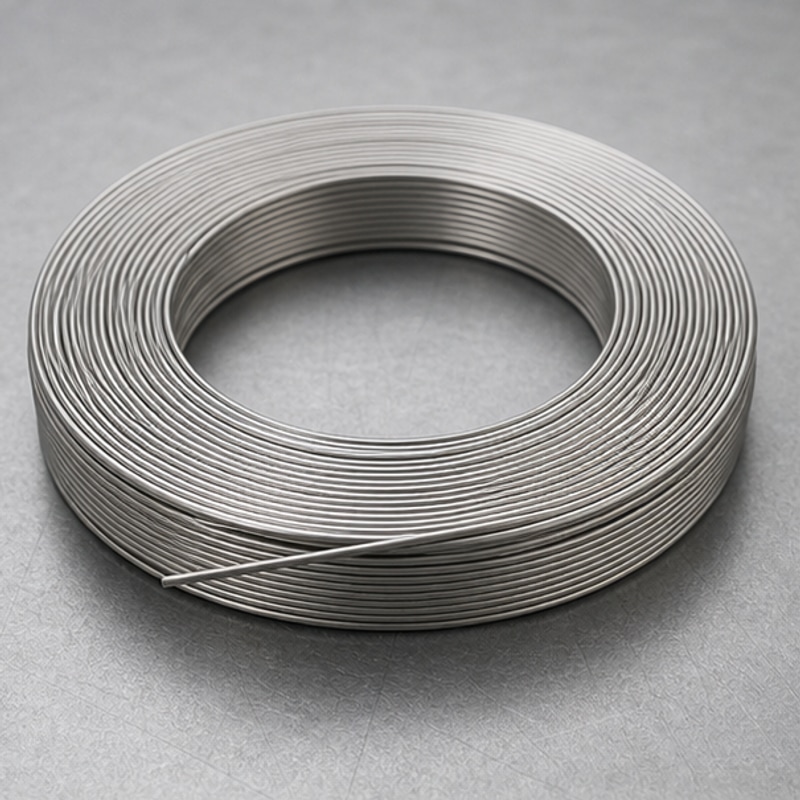
Lengths are supplied as random mill lengths (typically 1–6 m), cut-to-length (e.g., 300 mm, 500 mm, 1000 mm), or coiled for longer continuous runs. For capillary applications, coil lengths up to 100 m are possible depending on OD and wall ratio.
Wall thickness selection should consider internal pressure (burst strength) and collapse resistance, especially if the tube will be bent or swaged. Use the applicable design code (ASME B31.3, ASME BPVC Sec VIII) for burst pressure calculations.
Tolerances (Typical Ranges for Capillary Tube)
Tolerances for 321H seamless capillary tube depend on drawing condition (cold drawn, annealed, or stress relieved) and the applicable standard. Typical ranges:
| Parameter | Typical Tolerance | Notes |
|---|---|---|
| Outer diameter | ±0.05 mm (for OD ≤ 6.35 mm) | Tighter (±0.025 mm) available by agreement |
| Wall thickness | ±10% of nominal | Measured at any cross-section |
| Length (cut pieces) | +2 mm / -0 mm (for lengths < 1000 mm) | Tighter by agreement |
| Straightness | 1 mm per 1000 mm | Per ASTM A1016 |
| Ovality | Depends on drawing, material condition, process route, and mutual agreement between parties. |
For applications requiring ID control (e.g., fluid flow or wire insertion), specify ID tolerance directly. ID is typically controlled through wall tolerance and OD tolerance.
End Condition and Burr Control
Capillary tube ends must be cleanly cut and deburred to prevent debris entrapment or damage during assembly. Common end conditions:
- Square cut with ≤ 0.2 mm burr (internal and external)
- Deburred to specified edge break (e.g., 0.1 mm max radius)
- Chamfered for welding or fitting insertion
- Ends sealed with caps or heat-shrink tubing for cleanliness
For medical or clean-assembly applications, specify burr-free ends with visual inspection under 20× magnification.
Surface Finish and Cleanliness Requirements
321H seamless capillary tube is typically supplied in the annealed and pickled condition (surface roughness Ra 1.6–3.2 μm). For tighter requirements:
- Bright annealed (Ra ≤ 0.8 μm) for clean assemblies
- Electropolished (Ra ≤ 0.4 μm) for reduced friction or improved cleanability
- Mechanically polished (Ra ≤ 0.6 μm) for aesthetic or ultrasonic cleaning
Cleanliness levels can be specified as degreased (no visible oil), oxygen-cleaned (low hydrocarbon residue), or ultrasonically cleaned and bagged for medical or analytical use.
Inspection Documentation
Standard documentation for 321H seamless capillary tube includes:
- Material test certificate (EN 10204 Type 3.1 or 3.2) with chemical analysis and mechanical properties
- Dimensional inspection report (OD, ID, wall, length, straightness)
- Surface finish measurement (if specified)
- Hydrostatic or pneumatic pressure test report (if required)
- Positive material identification (PMI) certificate (if specified)
For critical applications, request traceability from melt to finished tube.
Packaging Considerations
321H capillary tube is susceptible to mechanical damage and surface contamination. Typical packaging includes:
- Individual poly bags or shrink wrap for cut lengths
- Foam-lined wooden crates or cardboard boxes for rigid lengths
- Plastic spools or coils for continuous lengths
- Desiccant packs and moisture barrier for export shipments
Specify packaging if tube must arrive clean, dry, and free of abrasion.
RFQ Information Checklist
To ensure accurate quotation and delivery, include the following in your request for quotation (RFQ):
- Material grade: 321H (UNS S32109) and applicable standard (ASTM A213, A269)
- Dimensions: OD, wall thickness, length (cut or coil)
- Tolerances: OD, wall, length, straightness, ovality
- Condition: Annealed, bright annealed, stress relieved
- Surface finish: Ra value and clean condition
- End condition: Square cut, deburred, chamfered, sealed
- Quantity: Number of pieces or total length
- Documentation: Certificate type (3.1, 3.2), PMI, pressure test
- Packaging: Individual, bulk, export
Note: 321H is not inherently suitable for implantable medical devices. For medical applications, confirm compatibility with sterilization methods and fluid contact requirements.
To request a quotation for 321H seamless capillary tube, submit your drawings, material grade, quantity, tolerance, surface finish, and inspection requirements through the Healsmed website. The engineering team will review and respond with a technical evaluation.

Healsmed
Leading Stainless Steel Capillary Tube Factory. 1,400+ standard sizes IN STOCK & ready to ship worldwide! High precision, factory-direct price.