321 Thin Wall Capillary Tube: Material Properties, Manufacturing Tolerances, and Application Guide
When a design calls for a 321 thin wall capillary tube, the engineer is typically solving for a combination of high-temperature oxidation resistance and formability in a small-diameter, thin-wall geometry. Stabilized against intergranular corrosion with titanium, 321 stainless steel offers a distinct advantage over 304 or 316L when the tube will see sustained service in the 427–816 °C range, or when post-weld annealing is impractical. This article covers the material properties, manufacturing tolerances, and application considerations specific to 321 thin wall capillary tube.
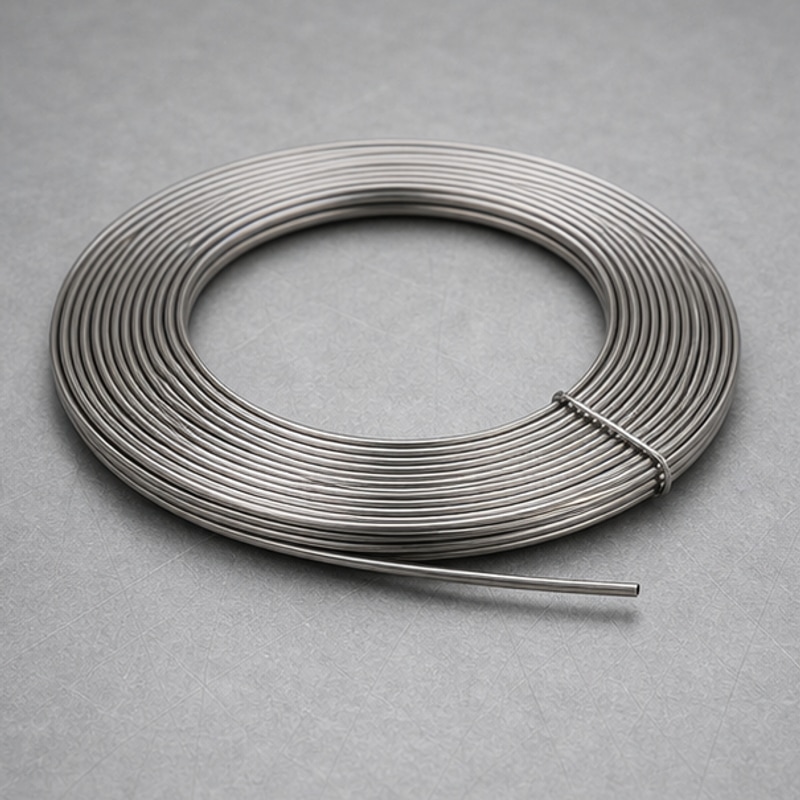
Applicable Scenarios and Industries
321 thin wall capillary tube is specified in applications where the assembly will be exposed to repeated heating cycles or where carbon precipitation must be avoided. Common use cases include:
- Thermocouple sheaths and temperature sensor probes
- Heat exchangers in chemical processing and power generation
- Exhaust gas sampling lines and emission monitoring equipment
- Hydraulic and pneumatic control lines in aerospace actuators
- Medical device subassemblies that undergo ethylene oxide (EtO) or autoclave sterilization cycles
In each case, the titanium stabilization prevents chromium carbide precipitation at grain boundaries, preserving corrosion resistance and mechanical integrity after welding or thermal exposure.
Material Grade and Designations
321 stainless steel is an austenitic grade stabilized with titanium. Relevant standards and designations include:
| Standard | Designation |
|---|---|
| UNS | S32100 |
| ASTM A269 | Seamless and welded austenitic tubing for general service |
| ASTM A213 | Seamless ferritic and austenitic boiler, superheater, and heat-exchanger tubes |
| EN 10216-5 | 1.4541 (TC1) – Seamless stainless tubes for pressure purposes |
Key compositional limits per ASTM A269 (weight %, balance Fe):
- Carbon: 0.08 max
- Manganese: 2.00 max
- Silicon: 0.75 max
- Chromium: 17.0–19.0
- Nickel: 9.0–12.0
- Titanium: 5 × (C + N) min, 0.70 max
- Phosphorus: 0.045 max
- Sulfur: 0.030 max
Compared to 316L, 321 has slightly lower general corrosion resistance in chloride environments but superior resistance to intergranular attack after welding. 321 is not inherently “medical grade”; suitability for a specific medical device depends on the device classification, sterilization method, and the manufacturer’s validated process.
OD, ID, Wall Thickness, and Length Considerations
For thin wall capillary tube, the wall thickness is typically less than 10% of the outer diameter. Common dimensional ranges for 321 thin wall capillary tube include:
| Parameter | Typical Range |
|---|---|
| Outer diameter (OD) | 0.5 mm – 6.35 mm (0.020″ – 0.250″) |
| Wall thickness | 0.05 mm – 0.50 mm (0.002″ – 0.020″) |
| Length (cut pieces) | Custom, typically 10 mm – 6000 mm |
| Coil length (if applicable) | Depends on drawing, material condition, and mutual agreement between parties |
Because 321 work-hardens at a rate similar to 304, drawing to thin walls requires careful process control. The titanium content can make surface finish more sensitive to die wear, so consistent lubrication and die maintenance are critical.
Tolerances
Tolerances for 321 thin wall capillary tube are typically specified per ASTM A269 or by customer drawing. Common ranges for small-diameter tubing:
| Parameter | Commercial Tolerance | Precision (if available) |
|---|---|---|
| OD tolerance | ±0.05 mm (±0.002″) | ±0.025 mm (±0.001″) |
| Wall thickness tolerance | ±10% of nominal | Depends on drawing, material condition, process route, and mutual agreement between parties |
| Length tolerance (cut pieces) | ±0.5 mm (standard) | ±0.2 mm (if specified) |
| Straightness | 1 mm/m max | Tighter if specified |
Tighter tolerances are possible but should be discussed during the RFQ stage with the supplier’s engineering team.
End Condition and Burr Control
Capillary tube ends must be clean and burr-free for leak-tight connections, sensor insertion, or welding. Common end conditions include:
- Square cut (perpendicular to axis, burr removed)
- Deburred ID and OD (mechanical or chemical deburring)
- Chamfered ends (for easier insertion into fittings)
- Custom end forms (flared, reduced, or expanded) – depends on drawing
Burr control is especially important for thin walls: excessive deburring can thin the wall beyond tolerance. For critical applications, specify maximum allowable burr height (e.g., 0.05 mm max).
Surface Finish and Cleanliness Requirements
Surface finish for 321 thin wall capillary tube is typically supplied in one of the following conditions:
- Annealed and pickled (matte, oxide-free surface)
- Bright annealed (smooth, reflective surface)
- Cold-drawn (as-drawn surface, may have light die marks)
Typical surface roughness values for capillary applications: Ra 0.4–0.8 µm (16–32 µin). For applications requiring higher cleanliness (e.g., medical or analytical instruments), the tube should be cleaned and packaged to prevent contamination. Cleanliness can be verified by:
- Visual inspection under white light
- Solvent rinse and gravimetric analysis (per customer-specified limits)
No specific cleanliness level is inherent to the 321 grade; the required level must be defined in the purchase specification.
Inspection Documentation
For 321 thin wall capillary tube, standard inspection documentation includes:
- Material test report (MTR / EN 10204 3.1) showing chemical composition and mechanical properties
- Dimensional inspection report (OD, ID, wall, length, straightness)
- Surface finish report (if Ra is specified)
- Hydrostatic or pneumatic test report (if required by ASTM A269)
- Certificate of conformance (if no third-party inspection is required)
Additional documentation (e.g., PMI report, third-party inspection certificate) depends on the customer’s specification and mutual agreement.
Packaging Considerations
Packaging for thin wall capillary tube must prevent bending, scratching, and contamination. Typical options:
- Individual plastic sleeves or tubes for cut pieces
- Foam-lined boxes with compartment dividers
- Spool or coil packaging for long lengths (with flanges to prevent collapse)
- Vacuum-sealed or nitrogen-purged bags for cleanliness-sensitive parts
Packaging method should be agreed upon at the time of order, especially for medical or cleanroom applications.
RFQ Information Checklist
To ensure an accurate quotation for 321 thin wall capillary tube, provide the following in your request:
- Material grade (UNS S32100) and applicable standard (ASTM A269, A213, or EN 10216-5)
- OD, wall thickness (or ID), and length with tolerances
- Quantity (pieces or meters)
- End condition (square cut, deburred, chamfered, custom)
- Surface finish requirement (Ra value or condition)
- Cleanliness level, if applicable
- Inspection documentation required (MTR, dimensional report, etc.)
- Packaging preference
- Any special process requirements (e.g., passivation, bright annealing, hydro test)
To request a quotation for 321 thin wall capillary tube, submit your drawings, material grade, quantity, tolerance, surface finish, and inspection requirements through the Healsmed website. The engineering team will review and respond with a technical evaluation.

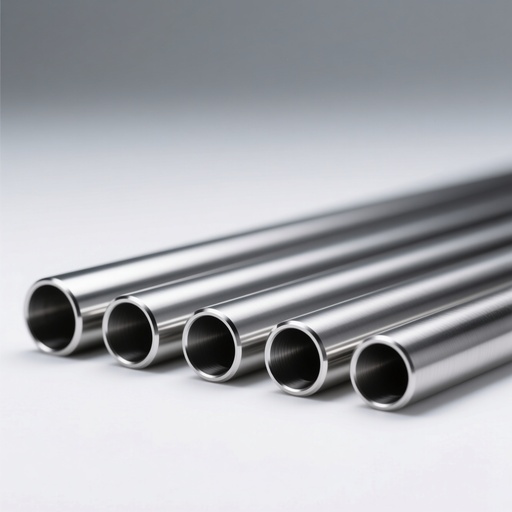
Healsmed
Leading Stainless Steel Capillary Tube Factory. 1,400+ standard sizes IN STOCK & ready to ship worldwide! High precision, factory-direct price.