321 Precision Capillary Tubing: Material Properties, Manufacturing Tolerances, and Application Guide
When designing a medical device or instrumentation system that must operate at elevated temperatures—such as a gas chromatograph column, a surgical tool with localized heating, or a sensor housing exposed to repeated thermal cycling—standard 304 or 316L stainless steel capillary tubing may fail prematurely due to intergranular corrosion or sensitization. This is the engineering problem that 321 precision capillary tubing solves. As a stabilized austenitic stainless steel, grade 321 offers superior resistance to chromium carbide precipitation in the 427–871°C heat-affected zone, making it the material of choice for applications requiring sustained elevated-temperature strength and corrosion resistance. For engineers and procurement professionals sourcing small-diameter tubing for such demanding environments, understanding the material properties, achievable tolerances, and application constraints is essential to making a technically sound selection.
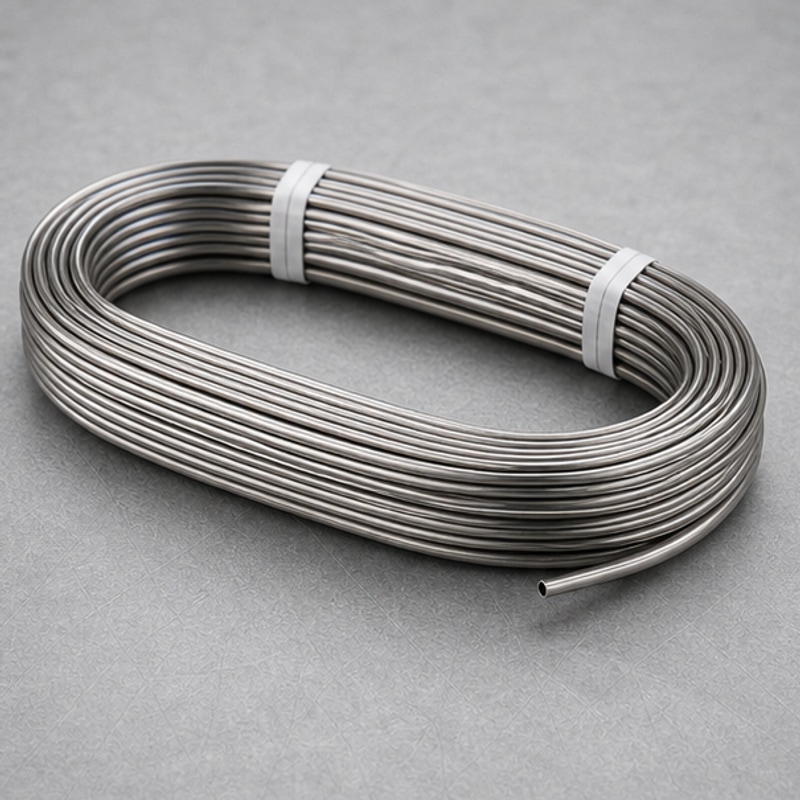
Applicable Scenarios and Industries
321 precision capillary tubing is specified where the operating environment involves temperatures above 500°C, cyclic heating, or corrosive media that would attack sensitized grain boundaries in non-stabilized grades. Typical applications include:
- Gas chromatography and analytical instrumentation (heated columns and transfer lines)
- Thermocouple sheaths and temperature sensor probes
- Heat exchangers in chemical processing and pharmaceutical manufacturing
- Exhaust gas sampling systems for emissions monitoring
- Aerospace and defense hydraulic or pneumatic control lines exposed to thermal cycling
- Medical devices requiring localized heat sterilization or cauterization components
In each case, the tubing must maintain dimensional stability, surface integrity, and corrosion resistance after exposure to repeated thermal cycles that would cause carbide precipitation in unstabilized grades.
Material Grade: 321 Stainless Steel
Alloy 321 (UNS S32100) is an austenitic stainless steel stabilized with titanium. The titanium content (typically 5×(C+N) minimum, up to 0.70% max) prevents chromium carbide formation at grain boundaries during welding or high-temperature service. Key designations and standards include:
- ASTM A269: Standard specification for seamless and welded austenitic stainless steel tubing for general service
- ASTM A213: Standard specification for seamless ferritic and austenitic alloy-steel boiler, superheater, and heat-exchanger tubes
- EN 10216-5: Seamless steel tubes for pressure purposes – stainless steel tubes
Typical chemical composition (weight %, per ASTM A269):
| Element | 321 (UNS S32100) |
|---|---|
| Carbon | ≤ 0.08% |
| Manganese | ≤ 2.00% |
| Silicon | ≤ 0.75% |
| Phosphorus | ≤ 0.045% |
| Sulfur | ≤ 0.030% |
| Chromium | 17.0–19.0% |
| Nickel | 9.0–12.0% |
| Titanium | 5×(C+N) min – 0.70% max |
| Iron | Balance |
Mechanical properties (typical, annealed condition per ASTM A269): tensile strength ≥ 515 MPa, yield strength ≥ 205 MPa, elongation ≥ 35% (in 2 in. or 50 mm).
OD / ID / Wall Thickness / Length Considerations
321 precision capillary tubing is commonly produced in the following dimensional ranges (capabilities depend on drawing, material condition, process route, and mutual agreement between parties):
- Outside diameter (OD): Typically 0.5 mm to 6.35 mm (0.020″ to 0.250″) for capillary applications. Larger diameters up to 12.7 mm (0.500″) may be available.
- Inside diameter (ID): As small as 0.10 mm (0.004″) depending on wall thickness and drawing process.
- Wall thickness: Ranges from 0.05 mm (0.002″) to 1.65 mm (0.065″). Thin-wall tubes require careful handling and tighter control of ovality.
- Length: Typically supplied in random mill lengths (1–6 m) or cut-to-length as specified. Coiled lengths are available for small OD tubing.
When specifying dimensions, note that ID tolerance is often more critical than OD for flow or sensor applications. If ID is not directly measured, it is calculated from OD and wall thickness, and its tolerance is the sum of OD and wall thickness tolerances.
Tolerances
For precision capillary tubing, tolerances are tighter than standard ASTM A269 limits. Typical achievable tolerances (not guaranteed for all sizes; confirm with supplier):
| Parameter | Typical Precision Range | Notes |
|---|---|---|
| OD tolerance | ±0.025 mm to ±0.050 mm (for OD ≤ 6.35 mm) | Depends on drawing and final sizing pass |
| Wall thickness tolerance | ±10% of nominal (or ±0.025 mm, whichever is greater) | Per ASTM A269 unless tighter specified |
| Length tolerance | ±1.5 mm for cut lengths ≤ 1 m; ±3 mm for longer | Can be tightened with additional processing |
| Straightness | 1.5 mm/m max | Per ASTM A269; tighter possible |
| Ovality (out-of-round) | ≤ 2% of nominal OD | Applicable for thin-wall tubes |
For critical applications, tolerances may be negotiated tighter than these ranges. Always specify the governing standard (e.g., ASTM A269, A213) and any additional requirements on the drawing.
End Condition and Burr Control
Capillary tubes are often used in assemblies where internal or external burrs can obstruct flow, damage seals, or cause contamination. Common end conditions for 321 precision capillary tubing include:
- Square cut (deburred): Ends cut perpendicular to the tube axis, with internal and external burrs removed. Acceptable burr height depends on drawing and mutual agreement.
- Chamfered or beveled: For welding or fitting insertion, ends may be chamfered per specified angle and depth.
- Swaged or reduced ends: For joining to connectors or other tubing.
Burr control is typically verified by visual inspection under magnification (e.g., 10× to 20×) or by passing a burr detection gage. Maximum allowable burr height depends on the application; for medical or analytical instruments, it may be as low as 0.025 mm.
Surface Finish and Cleanliness Requirements
321 tubing is typically supplied in the annealed condition with a bright or matte finish. Surface finish is critical for applications involving fluid flow, particulate sensitivity, or adhesion of coatings. Typical specifications:
- Surface roughness (Ra): 0.4 µm to 0.8 µm (16–32 µin) for standard medical capillary; 0.2 µm (8 µin) or better for high-purity applications (depends on drawing, material condition, process route, and mutual agreement).
- Cleanliness: Tubing may be supplied with degreased and cleaned surfaces (free of oils, lubricants, and particulate). For medical or analytical use, additional cleaning (e.g., ultrasonic or solvent wash) and packaging in clean-room conditions may be specified.
- Passivation: Optional, per ASTM A967, to enhance corrosion resistance and remove free iron from the surface.
Inspection Documentation
For traceability and quality assurance, the following documentation is commonly provided with 321 precision capillary tubing orders:
- Material test report (MTR) / EN 10204 3.1 certificate: Documents chemical composition and mechanical properties per heat lot.
- Dimensional inspection report: Records OD, ID, wall thickness, length, straightness, and ovality measurements for each lot (or piece, if agreed).
- Surface finish report: Ra measurements from representative samples.
- Burr inspection report: Visual or gage inspection results for end conditions.
- Certification of compliance: Statement that the tubing meets specified standards (e.g., ASTM A269).
Not all suppliers provide all reports as standard; specify your requirements at the RFQ stage.
Packaging Considerations
Packaging for 321 precision capillary tubing must protect the surface finish and prevent bending, kinking, or contamination. Typical packaging options:
- Straight lengths: Bundled with foam or paper separators, secured with straps, and shipped in rigid cardboard or wooden crates.
- Coiled tubing: Wound on spools or in coils with minimum bend radius maintained, then bagged in polyethylene.
- Clean-room packaging: Double-bagged in clean polyethylene, with desiccant and indicator cards, for medical or analytical applications.
- End caps: Plastic caps on both ends to prevent ingress of debris and protect from mechanical damage.
Specify packaging type and cleanliness level in your RFQ.
RFQ Information Checklist
To receive an accurate and timely quotation for 321 precision capillary tubing, include the following in your inquiry:
- Material grade: 321 (UNS S32100)
- Dimensions: OD, ID (or wall thickness), length, and tolerances
- Quantity (total length or number of pieces)
- Applicable standard (e.g., ASTM A269, A213)
- End condition and burr requirements
- Surface finish and cleanliness specifications
- Required inspection documentation
- Packaging requirements
- Delivery timeline (if urgent)
To request a quotation for 321 precision capillary tubing, submit your drawings, material grade, quantity, tolerance, surface finish, and inspection requirements through the Healsmed website. The engineering team will review and respond with a technical evaluation.

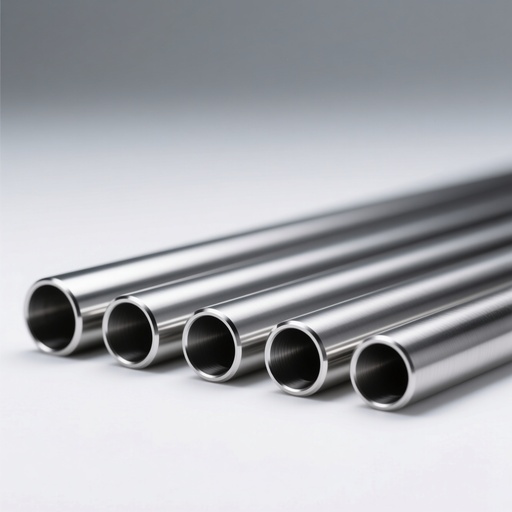
Healsmed
Leading Stainless Steel Capillary Tube Factory. 1,400+ standard sizes IN STOCK & ready to ship worldwide! High precision, factory-direct price.