321 Miniature Tubing: Material Properties, Manufacturing Tolerances, and Application Guide
When designing or sourcing components for high-temperature medical device assemblies, analytical instruments, or aerospace subsystems, engineers often face a specific challenge: the tubing must resist intergranular corrosion and maintain mechanical strength after repeated heating cycles. Standard 304 or 316L stainless steel may sensitize in the 800°F to 1500°F (427°C to 816°C) range, leading to carbide precipitation and embrittlement. This is the engineering problem that 321 miniature tubing solves. As a titanium-stabilized austenitic stainless steel, Type 321 offers superior resistance to sensitization and creep, making it the preferred choice for capillary and small-diameter tubing applications where thermal exposure is unavoidable.
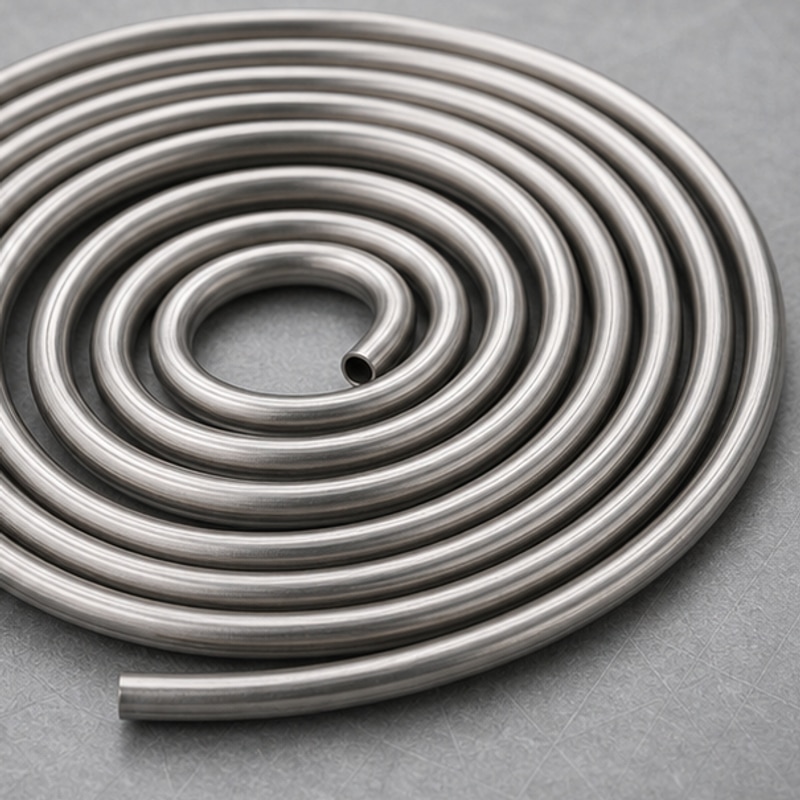
Applicable Scenarios and Industries
321 miniature tubing is specified in applications where the tubing will experience sustained or cyclic temperatures between 800°F and 1500°F (427°C to 816°C), or where post-weld heat treatment is not feasible. Typical industries include:
- Medical device manufacturing: Sterilization equipment components, surgical tool shafts, and thermal probes that undergo repeated autoclave cycles.
- Aerospace and defense: Hydraulic lines, fuel system capillaries, and sensor sheathing in engine compartments.
- Chemical and petrochemical processing: Small-diameter heat exchanger tubes, thermowell sleeves, and catalyst injection lines.
- Analytical and laboratory instrumentation: Gas chromatography columns, fluid transfer lines, and thermal desorption tubes.
Material Grade and Designations
Type 321 stainless steel is designated by several standards:
- UNS S32100
- ASTM A269 (seamless and welded tubing for general service)
- ASTM A213 (seamless ferritic and austenitic alloy-steel boiler, superheater, and heat-exchanger tubes)
- EN 10216-5 (TC1)
- JIS G 3463
The key difference from 304/304L and 316/316L is the addition of titanium (Ti) at a minimum of 5×%C up to 0.70% max. This titanium forms stable carbides (TiC), preventing chromium carbide precipitation at grain boundaries during heating. The nominal composition per ASTM A269 is:
| Element | Composition Range (%) |
|---|---|
| Carbon | 0.08 max |
| Manganese | 2.00 max |
| Phosphorus | 0.045 max |
| Sulfur | 0.030 max |
| Silicon | 1.00 max |
| Chromium | 17.0 – 19.0 |
| Nickel | 9.0 – 12.0 |
| Titanium | 5×%C min – 0.70 max |
Mechanical properties in annealed condition (ASTM A269) include tensile strength ≥ 75 ksi (515 MPa) and yield strength ≥ 30 ksi (205 MPa).
OD / ID / Wall Thickness / Length Considerations
321 miniature tubing is available in outer diameters (OD) from 0.020 in. (0.50 mm) up to 0.500 in. (12.70 mm). Wall thickness typically ranges from 0.004 in. (0.10 mm) to 0.065 in. (1.65 mm). Lengths are commonly supplied in random mill lengths (10–20 ft / 3–6 m) or cut-to-length per drawing. For medical device and instrumentation applications, close-tolerance ID is often more critical than OD, especially for fluid metering or wire guidance. The wall thickness ratio (OD/wall) should be specified to avoid ovality issues during bending or swaging.
Tolerances (Typical Ranges for Capillary Tube)
Tolerances for 321 miniature tubing depend on the manufacturing process (seamless or welded-and-drawn), temper condition, and final drawing passes. The following are commonly achievable ranges for small-diameter tubing per ASTM A269 and industry practice:
| Parameter | Typical Tolerance Range |
|---|---|
| OD (0.020 – 0.125 in.) | ±0.001 in. to ±0.002 in. (0.025 – 0.050 mm) |
| OD (0.126 – 0.500 in.) | ±0.002 in. to ±0.005 in. (0.050 – 0.127 mm) |
| ID | depends on drawing, material condition, process route, and mutual agreement between parties |
| Wall thickness | ±10% of nominal (min ±0.001 in. / 0.025 mm) |
| Length (cut-to-length) | +0.062 in. / -0.000 in. (1.58 mm / 0.00 mm) typical |
| Straightness | 0.005 in./ft (0.42 mm/m) typical for capillary sizes |
For tighter tolerances (e.g., ±0.0005 in. on OD), specify “special tolerance” and consult with the supplier regarding achievable limits for the specific diameter and wall combination.
End Condition and Burr Control
For miniature tubing, end condition is critical to prevent flow restriction, particle generation, or assembly interference. Standard options include:
- Plain cut: Sheared or saw-cut ends, typically with burrs up to 0.005 in. (0.13 mm).
- Deburred: Mechanical or abrasive deburring to remove sharp edges; burr height ≤ 0.002 in. (0.05 mm).
- Chamfered: 45° internal or external chamfer per drawing.
- Square cut: Perpendicularity within 0.005 in./in. (0.13 mm/25 mm) of tube OD.
For medical or clean-stream applications, specify “burr-free” with a maximum allowable burr height and method of verification (e.g., 10× magnification inspection).
Surface Finish and Cleanliness Requirements
321 miniature tubing can be supplied in several surface conditions:
- Bright annealed: Oxide-free, bright surface with typical Ra ≤ 20 μin. (0.5 μm).
- Pickled: Matte finish with light oxide removal.
- Electropolished: Smooth, passive surface with Ra ≤ 10 μin. (0.25 μm) for improved corrosion resistance and cleanability.
Cleanliness level should be specified if the tubing will be used in oxygen service, medical fluid pathways, or analytical systems. Common standards include degreased to < 10 mg/ft² residual contamination or per ASTM G93 Level C.
Inspection Documentation
Standard documentation for 321 miniature tubing includes:
- Material test report (MTR): Per ASTM A269 or A213, including heat number, chemical analysis, and mechanical properties.
- Dimensional inspection report: OD, ID, wall, length, and ovality measurements for each lot or per sampling plan agreed upon.
- Surface finish report: Ra values if electropolished or special finish is specified.
- Cleanliness certificate: If required for medical or high-purity applications.
All documentation should be traceable to the specific lot and submitted with shipment.
Packaging Considerations
321 miniature tubing is typically packaged to prevent mechanical damage, moisture ingress, and contamination during transit. Common methods include:
- Bundled and wrapped in kraft paper or plastic film for standard lengths.
- Individual polybagging for cut-to-length pieces.
- Coiled on spools for continuous lengths (if OD and wall permit).
- Foam-lined cardboard or wooden crates for fragile capillary sizes.
For medical or cleanroom applications, specify double-bagging with desiccant and cleanliness certification.
RFQ Information Checklist
To ensure accurate quotation and timely delivery of 321 miniature tubing, include the following in your request for quotation (RFQ):
- Material grade: 321 (UNS S32100) and applicable standard (e.g., ASTM A269, A213)
- Quantity: total length or number of pieces
- OD, ID, wall thickness, and length with tolerances
- End condition: plain, deburred, chamfered, square cut
- Surface finish: bright annealed, pickled, electropolished
- Cleanliness requirements: degreased, oxygen service, medical grade
- Inspection documentation required: MTR, dimensional report, surface finish report
- Packaging instructions: individual bagging, spool, crate
- Any special testing: hydrostatic, eddy current, helium leak
To request a quotation for 321 miniature tubing, submit your drawings, material grade, quantity, tolerance, surface finish, and inspection requirements through the Healsmed website. The engineering team will review and respond with a technical evaluation.

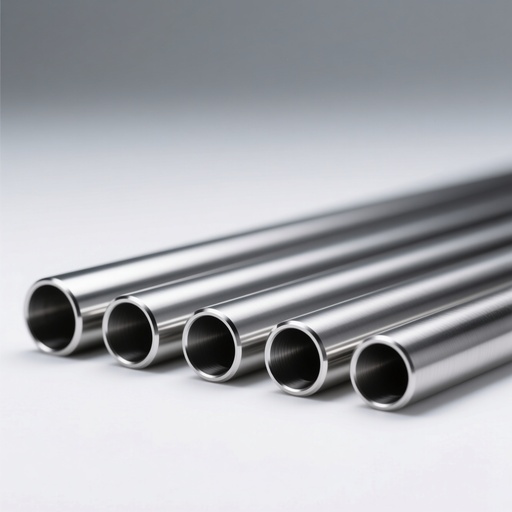
Healsmed
Leading Stainless Steel Capillary Tube Factory. 1,400+ standard sizes IN STOCK & ready to ship worldwide! High precision, factory-direct price.