Inconel 625 Precision Capillary Tubing: Material Properties, Manufacturing Tolerances, and Application Guide
If you are sourcing Inconel 625 precision capillary tubing, you are likely balancing three competing demands: corrosion resistance in aggressive media, dimensional control at very small diameters, and a documented supply chain that satisfies both engineering and quality teams. This article covers the material properties that matter for capillary service, the manufacturing tolerances you can realistically specify, and the inspection and packaging details that determine whether a shipment is accepted or quarantined.
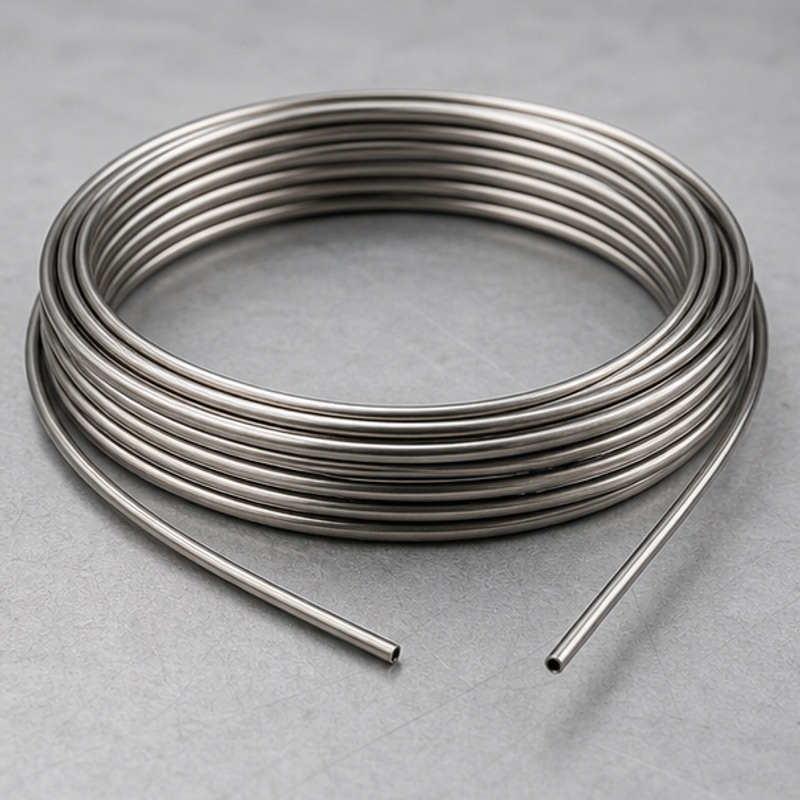
Why Inconel 625 for Capillary Tubing
Inconel 625 (UNS N06625) is a nickel-chromium-molybdenum alloy strengthened by niobium and tantalum. Its combination of high tensile strength and resistance to chloride-induced pitting and crevice corrosion makes it a candidate where 316L stainless steel is marginal. Typical chemical composition ranges per ASTM B444 / ASME SB444 include nickel 58.0% minimum, chromium 20.0–23.0%, molybdenum 8.0–10.0%, niobium plus tantalum 3.15–4.15%, and iron 5.0% maximum. These are specification ranges, not guaranteed values for every heat; verify against the actual mill certificate.
Compared with austenitic stainless steels, Inconel 625 maintains useful mechanical properties at elevated temperatures and resists chloride stress-corrosion cracking in many environments. It is not immune to every medium, and it is not automatically suitable for implantable devices. Suitability depends on the specific application, regulatory pathway, and end-user validation.
Applicable Scenarios and Industries
- Downhole and subsea instrumentation capillary lines where chlorides and high pressure are present
- Chemical injection and sampling systems in oil and gas
- Analytical instrumentation and chromatography transfer lines
- High-temperature sensor sheathing and thermocouple protection
- Aerospace and defense fluid handling where stainless steel corrosion resistance is insufficient
- Medical device and laboratory equipment components, subject to the device manufacturer’s own biocompatibility and regulatory assessment
Inconel 625 is generally specified when the operating environment exceeds what 316L can tolerate, or when elevated temperature strength is required. If your medium is benign and temperatures are moderate, 316L is usually more economical and easier to source.
OD, ID, Wall Thickness, and Length Considerations
Precision capillary tubing typically refers to small outside diameters with tight wall control. Common OD ranges for capillary service fall between roughly 0.5 mm and 6.35 mm (0.020 in to 0.250 in), with wall thicknesses from about 0.05 mm to 1.0 mm. The exact feasible combination depends on the drawing, the material condition, the process route (cold drawn, seamless, or welded and drawn), and mutual agreement between parties.
Key dimensional parameters to define on your drawing:
- Nominal OD and OD tolerance
- Nominal ID and ID tolerance, or wall thickness tolerance
- Concentricity or wall eccentricity limit
- Straight length or coil length, and coil inner diameter if coiled
- Straightness requirement for straight lengths
When ID is critical to flow or pressure drop, specify ID directly rather than relying on OD and wall tolerances to control it. Wall thickness variation affects burst pressure and flow uniformity more than OD variation in most capillary applications.
Tolerances Typical for Capillary Tubing
The table below shows representative tolerance bands that are commonly discussed for cold-drawn capillary. These are not commitments; achievable tolerances depend on size, wall ratio, material condition, and the agreed inspection method.
| Parameter | Typical discussion range | Notes |
|---|---|---|
| OD tolerance | ±0.025 mm to ±0.10 mm | Tighter on smaller OD; depends on process route |
| ID tolerance | ±0.025 mm to ±0.13 mm | Harder to hold as ID decreases |
| Wall thickness tolerance | ±10% to ±15% of nominal | Verify against drawing |
| Concentricity | 10% to 20% of wall | Application dependent |
| Straightness | 0.5 mm to 3 mm per meter | For straight lengths |
| Length tolerance | ±1 mm to ±5 mm | Cut length dependent |
Do not specify tolerances tighter than the function requires. Over-tight tolerancing raises cost and rejection risk without improving performance.
End Condition and Burr Control
Capillary tubing is often assembled into fittings, ferrules, or manifolds, so end condition matters as much as the tube body. Specify one of the following:
- Clean cut, deburred ID and OD
- Square cut with defined perpendicularity
- Chamfered end, with chamfer angle and depth
- Annealed or stress-relieved end, if the cut introduces work hardening
Burrs on the ID can shed particles into the flow path or interfere with flow calibration. Burrs on the OD can prevent proper ferrule seating and cause leaks. State your burr acceptance criteria explicitly, for example maximum burr height or a visual standard. If the tube will be orbital welded, specify whether the end must be free of contamination and whether a specific edge preparation is required.
Surface Finish and Cleanliness
Surface finish affects corrosion initiation, particle retention, and cleanability. Common specifications include:
- Ra value for ID and OD, if the application is sensitive to flow or contamination
- Freedom from scratches, draw marks, and embedded particles
- Pickled, passivated, or bright annealed condition
- Cleanliness level for oxygen, high-purity, or medical gas service
For high-purity or medical-adjacent applications, specify the cleaning method and verification. Common approaches include solvent cleaning, alkaline cleaning, and DI water rinse, with verification by particle count or residue testing. The acceptable cleanliness level depends on the end use and must be agreed between purchaser and supplier.
Inspection Documentation
For Inconel 625 capillary tubing, a typical documentation package may include:
- Mill certificate or material test report showing heat number, chemistry, and mechanical properties
- Dimensional inspection report with measured OD, ID, wall, and length
- Surface finish report if Ra is specified
- Cleanliness verification if specified
- Pressure test or leak test report if required
- Certificate of conformance
If your quality system requires traceability from raw material to finished tube, state that in the RFQ. Not every supplier maintains heat-to-tube traceability by default.
Packaging Considerations
Capillary tubing is easily bent and scratched in transit. Packaging should protect both dimensions and surface:
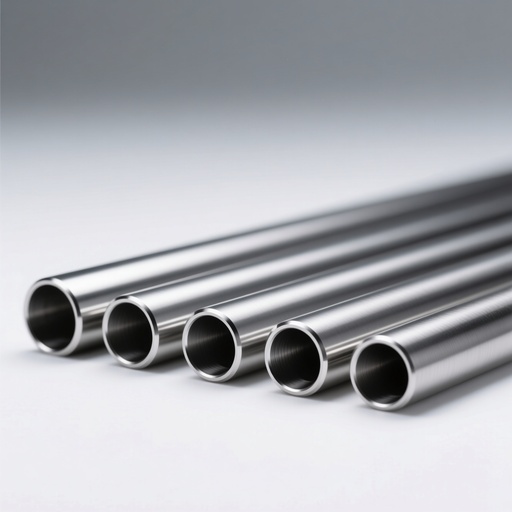
- Straight lengths in rigid tubes or channels with end caps
- Coils supported to prevent kinking and to maintain coil ID
- Individual protective sleeves for critical surface finishes
- Moisture barrier and desiccant for long storage or sea freight
- Labeling with heat number, size, quantity, and purchase order reference
If the tubing will be fed into automated equipment, ask about coil orientation and payout direction. A coil wound the wrong way can cause tangling and scrap at the machine.
RFQ Information Checklist
To get an accurate quotation and avoid back-and-forth, include the following in your inquiry:
- Material grade and specification (for example, Inconel 625 per ASTM B444)
- OD, ID, and wall thickness with tolerances
- Length: straight or coil, with tolerances
- Quantity: total length and number of pieces or coils
- End condition and burr requirement
- Surface finish and cleanliness requirement
- Inspection documentation required
- Packaging and labeling requirements
- Any special process requirements, such as annealing condition or pressure testing
- Delivery location and required date
If you have a drawing, send it. Drawings reduce ambiguity more than any written description.
To request a quotation for Inconel 625 precision capillary tubing, submit your drawings, material grade, quantity, tolerance, surface finish, and inspection requirements through the Healsmed website. The engineering team will review and respond with a technical evaluation.

Healsmed
Leading Stainless Steel Capillary Tube Factory. 1,400+ standard sizes IN STOCK & ready to ship worldwide! High precision, factory-direct price.