321 SS Capillary Tubing: Material Properties, Manufacturing Tolerances, and Application Guide
When medical device engineers and procurement teams search for 321 SS capillary tubing, they are typically trying to solve a specific engineering challenge: sourcing a corrosion-resistant, small-diameter tube that can withstand elevated temperatures during processing or in-service use without sensitization or intergranular corrosion. 321 stainless steel capillary tubing is selected for applications where standard 304 or 316L grades would risk carbide precipitation at weld zones or during high-temperature exposure. This article provides a technical guide to material properties, manufacturing tolerances, and application considerations for 321 SS capillary tubing, helping you evaluate whether this grade meets your design and process requirements.
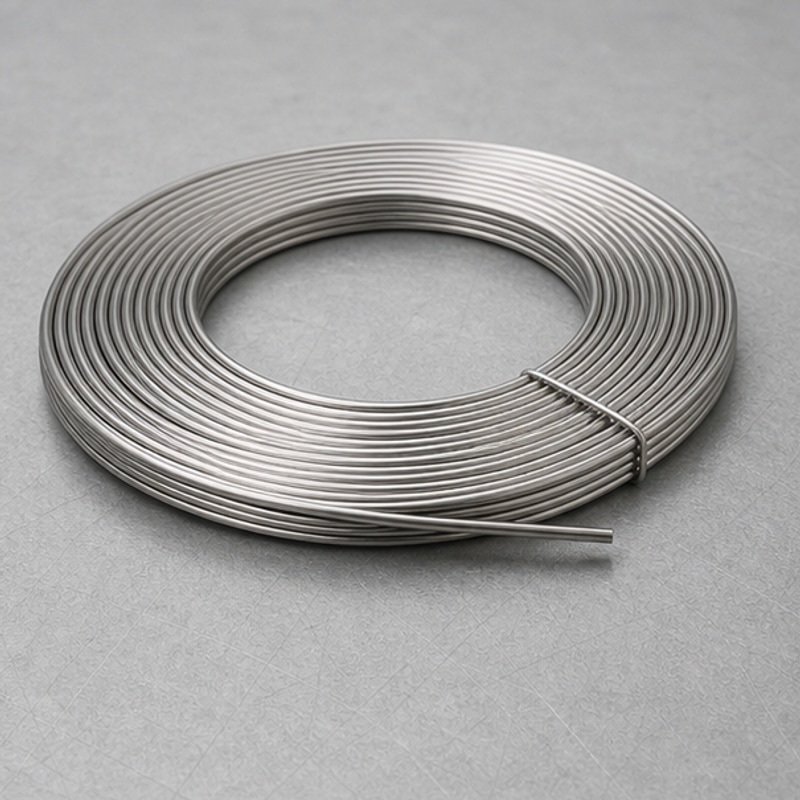
Applicable Scenarios and Industries
321 SS capillary tubing is specified primarily for environments involving elevated temperatures or corrosive media where stabilization against chromium carbide precipitation is critical. Common scenarios include:
- Medical device subassemblies – such as catheter shafts, endoscopic instruments, drug-delivery cannulas, and biopsy needle components that undergo steam autoclaving or ethylene oxide sterilization cycles.
- Analytical and diagnostic equipment – gas chromatography, mass spectrometry, and fluid-handling systems where thermal cycling occurs.
- Aerospace and defense – capillary lines for hydraulic or pneumatic controls in high-temperature zones.
- Chemical and petrochemical processing – small-bore heat exchanger tubes and instrument lines exposed to process temperatures up to 900 °C (1650 °F) in intermittent service.
321 SS is not typically chosen for room-temperature, non-corrosive applications where 304 or 316L would suffice at lower cost. Its value emerges when the service temperature exceeds approximately 425 °C (800 °F) or when post-weld heat treatment is impractical.
Material Grades and Designations
321 stainless steel is an austenitic grade stabilized with titanium. Relevant specifications include:
- UNS S32100 – unified numbering system designation.
- ASTM A269 – standard specification for seamless and welded austenitic stainless steel tubing for general service. Capillary tubing is often ordered to this standard.
- ASTM A213 – standard for seamless ferritic and austenitic alloy-steel boiler, superheater, and heat-exchanger tubes. Applicable when elevated-temperature properties are certified.
- EN 10216-5 – European standard for seamless stainless steel tubes for pressure purposes. Material number 1.4541 corresponds to 321 SS.
Chemical composition (weight %, per ASTM A269):
| Element | 321 SS (UNS S32100) |
|---|---|
| Carbon | 0.08 max |
| Manganese | 2.00 max |
| Phosphorus | 0.045 max |
| Sulfur | 0.030 max |
| Silicon | 1.00 max |
| Chromium | 17.0 – 19.0 |
| Nickel | 9.0 – 12.0 |
| Titanium | 5 × (C + N) min, 0.70 max |
The titanium addition (at least five times the carbon plus nitrogen content) prevents chromium carbide formation during welding or exposure to the 425–815 °C (800–1500 °F) sensitization range.
OD / ID / Wall Thickness / Length Considerations
For capillary tubing, the outer diameter (OD) typically ranges from 0.5 mm (0.020 in) to 6.35 mm (0.250 in). Wall thicknesses are commonly 0.10 mm (0.004 in) to 1.24 mm (0.049 in). Smaller diameters and thinner walls require tighter process controls.
- OD and ID – specified per engineering drawing. ID is often the critical dimension for fluid flow or wire passage.
- Wall thickness – uniformity is essential; eccentricity is controlled per ASTM A269 or mutual agreement.
- Length – typically supplied in random mill lengths (3–6 m) or cut-to-length per order. For capillary tubes, straightness requirements must be stated if the tube is used as a guidewire or insertion element.
Tolerances (Typical Ranges for Capillary Tube)
Tolerances depend on the manufacturing process (seamless, welded-and-drawn, or cold-drawn) and the standard invoked. For cold-drawn capillary tubing per ASTM A269, typical tolerances are:
| Parameter | Typical Tolerance | Notes |
|---|---|---|
| OD | ±0.025 mm (0.001 in) for OD ≤ 3.18 mm; ±0.05 mm (0.002 in) for larger OD | Closer tolerances achievable with additional cold drawing |
| ID | ±0.025 mm (0.001 in) or ±0.05 mm (0.002 in) depending on drawing condition | ID tolerance is a function of OD and wall tolerance |
| Wall thickness | ±10% of nominal thickness | For thin walls (<0.25 mm), tighter tolerance may require special processing |
| Length | +3 mm / -0 mm for cut lengths | Or as specified on drawing |
| Straightness | 1.0 mm per 1000 mm (0.001 in/in) typical | Straighter tubes available upon request |
For tighter tolerances (e.g., ±0.010 mm on OD), consult with the supplier during the RFQ stage. Tolerances not covered by standards are subject to mutual agreement.
End Condition and Burr Control
Capillary tubing ends must be cleanly cut and deburred, especially when used in fluidic assemblies or as needle cannulas. Common end conditions include:
- Square cut – perpendicular to tube axis, deburred ID and OD.
- Chamfered or radiused – for ease of insertion or to reduce flow disruption.
- No burr – burr height typically limited to 0.05 mm (0.002 in) maximum.
Burr control is critical in medical devices to prevent particle generation or tissue damage. Specify maximum burr height and inspection method (e.g., 20× magnification) on the drawing.
Surface Finish and Cleanliness Requirements
Surface finish for 321 SS capillary tubing is defined by the manufacturing process and any subsequent treatments:
- As-drawn – typical Ra 0.4–0.8 µm (16–32 µin). Suitable for many industrial and medical uses.
- Bright annealed – smoother surface, Ra 0.2–0.4 µm (8–16 µin), with a clean, oxide-free surface.
- Electropolished – Ra 0.1–0.2 µm (4–8 µin) achievable; improves corrosion resistance and reduces particle retention.
Cleanliness is specified per application. For medical devices, tubes may require ultrasonic cleaning, degreasing, and packaging in a clean environment. Specify if the tube must be free of oils, lubricants, or particulate residue.
Inspection Documentation
Standard documentation for 321 SS capillary tubing includes:
- Material test report (MTR) – per ASTM A269 or A213, certifying chemical composition and mechanical properties (tensile strength, yield strength, elongation).
- Dimensional inspection report – OD, ID, wall thickness, length, and straightness measurements.
- Surface finish report – Ra values and measurement method.
- Certificates of conformance – confirming compliance with specified standards.
Additional testing (e.g., hydrostatic, eddy current, or helium leak) can be specified. All documentation must be traceable to the heat lot.
Packaging Considerations
Packaging protects capillary tubing from damage, contamination, and corrosion during transit. Typical packaging options:
- Bundled and banded – for longer lengths, with protective sleeves or paper.
- Plastic caps – on ends to prevent damage and ingress of debris.
- Clean-room packaging – double-bagged and sealed for medical applications.
- Desiccant and VCI (vapor corrosion inhibitor) – for long-term storage or high-humidity environments.
Specify packaging requirements on the RFQ, especially if the tubing will be used directly in a sterile or clean assembly process.
RFQ Information Checklist
To ensure accurate quotation and manufacture, provide the following in your request for quotation (RFQ) for 321 SS capillary tubing:
- Material grade: 321 SS (UNS S32100)
- Applicable standard: ASTM A269, ASTM A213, or other
- Dimensions: OD, ID, wall thickness, and length (with tolerances)
- Quantity: total length or number of pieces
- End condition: square cut, chamfered, deburred
- Surface finish: as-drawn, bright annealed, electropolished (with Ra target)
- Cleanliness requirements: degreased, ultrasonic cleaned, etc.
- Inspection documentation: MTR, dimensional report, etc.
- Packaging: standard or clean-room
- Any special testing or certification
Providing a detailed engineering drawing eliminates ambiguity and ensures the tubing meets your design intent.
To request a quotation for 321 SS capillary tubing, submit your drawings, material grade, quantity, tolerance, surface finish, and inspection requirements through the Healsmed website. The engineering team will review and respond with a technical evaluation.

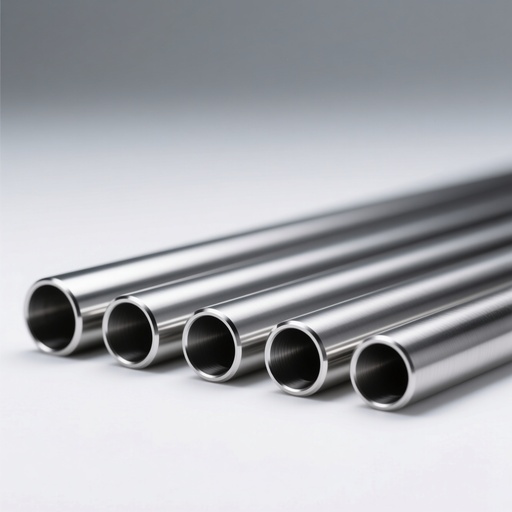
Healsmed
Leading Stainless Steel Capillary Tube Factory. 1,400+ standard sizes IN STOCK & ready to ship worldwide! High precision, factory-direct price.