321 SS Capillary Tube: Material Properties, Manufacturing Tolerances, and Application Guide
When your design requires a capillary tube that can resist intergranular corrosion after welding or during elevated-temperature service, standard 304 or 316L stainless steel may not be sufficient. The 321 SS capillary tube is the engineering answer to that problem: a stabilized austenitic stainless steel that prevents chromium carbide precipitation at the grain boundaries. This article provides the material properties, dimensional tolerances, and application-specific selection criteria you need to specify and source 321 SS capillary tube for medical devices, analytical instruments, and industrial fluid systems.
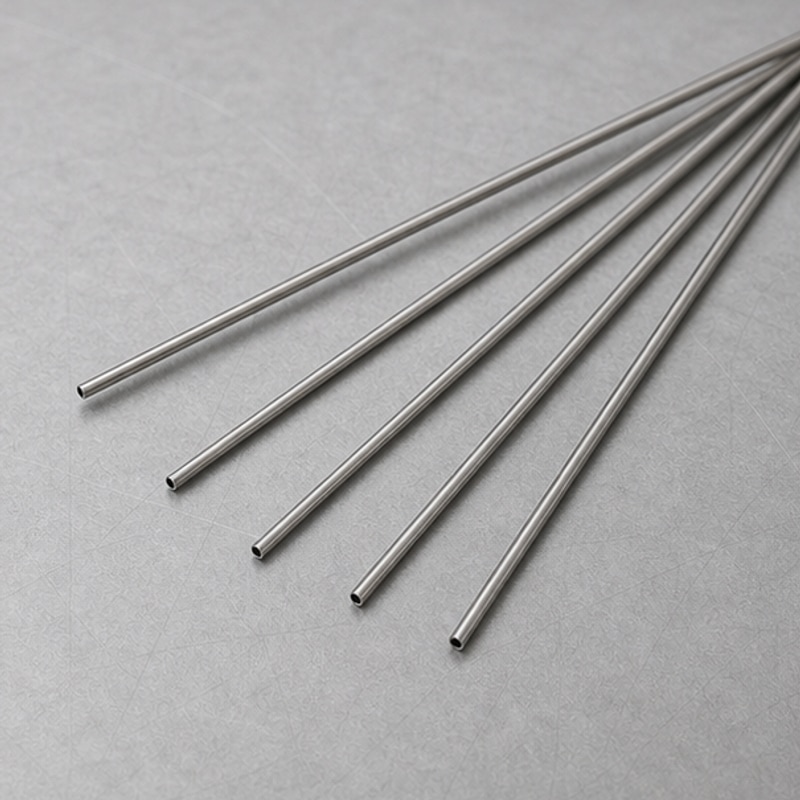
Applicable Scenarios and Industries
321 SS capillary tube is selected where the assembly or end-use involves temperatures between 427°C and 816°C (800°F to 1500°F), or where welding is performed without post-weld heat treatment. Common applications include:
- Heat exchangers and thermocouple sheaths in process analyzers
- Hydraulic and pneumatic control lines for gas turbines and aerospace actuators
- Medical device sub-assemblies that require autoclave sterilization (repeated cycling at 121°C–134°C)
- Exhaust gas sampling probes and emission monitoring equipment
- Chemical injection lines in corrosive environments where sensitization risk exists
Industries that routinely specify 321 SS capillary tube include medical device manufacturing (diagnostic equipment, surgical tools), aerospace, chemical processing, power generation, and analytical instrumentation.
Material Grade and Designation
Type 321 stainless steel is an austenitic grade stabilized with titanium. Titanium combines with carbon to form titanium carbide, leaving chromium in solid solution and preventing sensitization. The relevant standards and designations are:
| Standard | Designation |
|---|---|
| UNS | S32100 |
| ASTM A213 / A269 | TP321 |
| EN 10088-3 | 1.4541 |
| JIS G3459 | SUS 321 TP |
Chemical composition (weight %, per ASTM A213):
- Carbon: ≤0.08%
- Manganese: ≤2.00%
- Silicon: ≤1.00%
- Phosphorus: ≤0.045%
- Sulfur: ≤0.030%
- Chromium: 17.00–19.00%
- Nickel: 9.00–12.00%
- Titanium: ≥5 × (C + N) content, typically 0.15–0.70%
Mechanical properties (typical, annealed condition):
- Tensile strength: ≥515 MPa (75 ksi)
- Yield strength (0.2% offset): ≥205 MPa (30 ksi)
- Elongation: ≥35% (in 2 inches)
Note: These values are per ASTM A213 for tube. Actual properties depend on final temper and wall thickness.
OD / ID / Wall Thickness / Length Considerations
Capillary tube is typically defined by small outside diameters, usually ≤6.35 mm (0.250 inch). For 321 SS capillary tube, the following dimensional ranges are commonly available from precision mills:
| Dimension | Typical Range | Common Sizes |
|---|---|---|
| Outside diameter (OD) | 0.5 mm – 6.35 mm | 0.032″, 0.049″, 0.063″, 0.125″, 0.188″ |
| Inside diameter (ID) | 0.1 mm – 5.0 mm | 0.010″, 0.020″, 0.040″, 0.060″ |
| Wall thickness | 0.05 mm – 1.5 mm | 0.010″, 0.014″, 0.020″, 0.035″, 0.049″ |
| Length | Cut-to-length or random mill lengths | 1 m, 2 m, 4 m, or custom |
Specify both OD and ID (or OD and wall) on your drawing. For critical flow applications, ID tolerance is more important than OD. Length tolerance is typically ±0.5 mm for cut pieces under 100 mm; for longer lengths, tolerance depends on the cutting method and mutual agreement.
Tolerances (Typical Ranges for Capillary Tube)
Tolerances for 321 SS capillary tube are not standardized in a single table for all sizes; they depend on the manufacturing process (seamless vs. welded drawn) and the applicable ASTM standard. Typical commercial tolerances are:
| Parameter | Typical Tolerance | Notes |
|---|---|---|
| OD tolerance | ±0.025 mm (0.001″) to ±0.076 mm (0.003″) | Tighter on small OD; depends on drawing |
| ID tolerance | ±0.025 mm to ±0.10 mm | Often controlled by wall tolerance |
| Wall tolerance | ±10% of nominal wall | Per ASTM A269 for small-diameter tube |
| Straightness | 0.8 mm/m (0.010″ per foot) typical | Can be improved by rotary straightening |
| Cut length tolerance | ±0.5 mm for lengths <100 mm; ±1.0 mm for longer | Depends on cutting method (abrasive, laser, saw) |
For tighter tolerances (e.g., ±0.005 mm on OD), consult with the supplier early. Tighter tolerances increase cost and may require secondary centerless grinding.
End Condition and Burr Control
In capillary tube assemblies, burrs at the cut end can cause flow restriction, particle generation, or seal failure. Standard end conditions for 321 SS capillary tube include:
- As-cut: Clean cut with minimal burr; acceptable for non-sealing applications.
- Deburred: Internal and external edges chamfered or radiused; burr height ≤0.05 mm typical.
- Square cut: End perpendicular to axis within 0.5°; required for compression fittings.
- Custom end forms: Flared, reduced, or expanded ends per drawing.
Specify end condition clearly on your RFQ. For medical or analytical applications, specify “burr-free, both ends” and the maximum allowable burr height.
Surface Finish and Cleanliness Requirements
Surface finish for 321 SS capillary tube is typically specified by arithmetic average roughness (Ra). Common finishes:
- Mill finish (annealed and pickled): Ra 0.8–1.6 µm (32–63 µin); acceptable for general industrial use.
- Bright annealed: Ra 0.4–0.8 µm (16–32 µin); cleaner, smoother surface; common for medical and analytical.
- Electropolished: Ra ≤0.25 µm (10 µin); removes surface contaminants and micro-burrs; required for high-purity or cleanroom applications.
Cleanliness requirements may include:
- Degreased and oil-free (visual inspection or solvent wipe test)
- Clean to ASTM G93 Level C or better
- Packaged in sealed polyethylene bags with desiccant
- Certified clean for oxygen service (if applicable)
Do not assume “medical grade” or “implantable” finish unless your supplier provides verifiable surface measurement reports.
Inspection Documentation
When sourcing 321 SS capillary tube for regulated or safety-critical applications, request the following documentation:
- Material test report (MTR) / EN 10204 3.1 certificate: Includes heat number, chemical analysis, mechanical properties, and stabilization heat treatment details.
- Dimensional inspection report: OD, ID, wall, length, and straightness measurements per your tolerance requirements.
- Surface finish measurement report: Ra values at multiple locations.
- Burr inspection report: Internal and external burr height measurements (if specified).
- Hydrostatic or pneumatic pressure test report: If required by your application (per ASTM A1016).
For smaller capillary sizes, some tests (e.g., hydrostatic) may not be feasible; alternative NDT methods (eddy current, ultrasonic) are used per agreement.
Packaging Considerations
Proper packaging prevents surface damage, contamination, and bending during transit. Typical packaging for 321 SS capillary tube includes:
- Individual tubes sleeved in foam or spiral wrap
- Bundled with interleaving paper or plastic
- Sealed in polyethylene or vacuum packaging for cleanliness-critical orders
- Wooden crates or corrugated boxes for protection during shipping
- Desiccant and humidity indicator cards if required
Specify packaging requirements if your incoming inspection requires cleanroom-ready packaging or if tubes must remain free of oxidation during storage.
RFQ Information Checklist
To receive an accurate quotation for 321 SS capillary tube, include the following information in your request:
- Material grade: 321 SS (UNS S32100 / EN 1.4541)
- Outside diameter (OD) and tolerance
- Inside diameter (ID) or wall thickness and tolerance
- Length and length tolerance
- Quantity (pieces and total linear meters)
- End condition (as-cut, deburred, square, custom)
- Surface finish (mill, bright annealed, electropolished) and Ra target
- Cleanliness requirements (if any)
- Inspection documentation required (MTR, dimensional report, etc.)
- Packaging requirements
- Delivery timeline (if urgent)
- Applicable standard (ASTM A213, A269, or other)
- Reference drawing or sketch (if available)
To request a quotation for 321 SS capillary tube, submit your drawings, material grade, quantity, tolerance, surface finish, and inspection requirements through the Healsmed website. The engineering team will review and respond with a technical evaluation.

Healsmed
Leading Stainless Steel Capillary Tube Factory. 1,400+ standard sizes IN STOCK & ready to ship worldwide! High precision, factory-direct price.