317L Precision Capillary Tubing: Material Properties, Manufacturing Tolerances, and Application Guide
When designing fluidic systems for aggressive chemical environments or high-chloride medical device applications, engineers often find that standard 316L stainless steel capillary tubing does not provide sufficient corrosion resistance. This article addresses the selection, specification, and procurement of 317L precision capillary tubing—a low-carbon, molybdenum-enhanced austenitic stainless steel grade that offers improved pitting and crevice corrosion resistance compared to 316L. Readers sourcing tubing for analytical instruments, implantable delivery systems, or chemical sampling probes will find material properties, dimensional tolerances, and specification guidance tailored to this specific alloy.
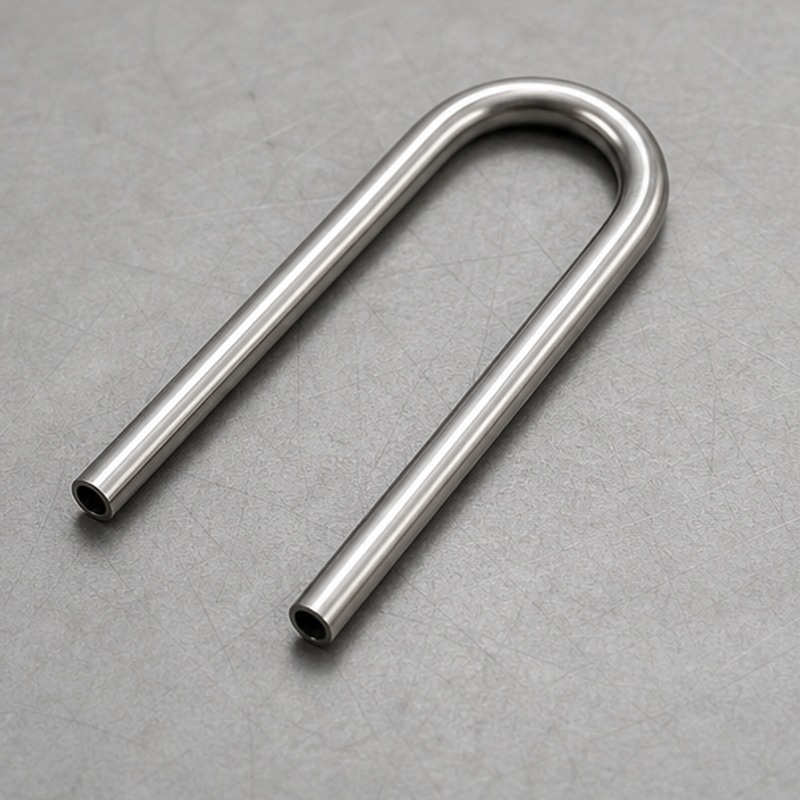
Applicable Scenarios and Industries
317L precision capillary tubing is specified where higher resistance to localized corrosion is required beyond 316L. Common applications include:
- High-performance liquid chromatography (HPLC) and mass spectrometry fluid paths
- Chemical injection and sampling probes in petrochemical and pharmaceutical processing
- Implantable drug delivery catheter components (as a structural element, not for drug contact unless verified separately)
- Gas analysis systems where chloride exposure is possible
- Marine and offshore instrumentation requiring resistance to seawater corrosion
Material Grade and Designation
317L is a low-carbon version of type 317 stainless steel. Its nominal composition per ASTM A269 / ASTM A213 includes:
| Element | Composition Range (wt%) |
|---|---|
| Carbon | 0.030 max |
| Chromium | 18.0 – 20.0 |
| Nickel | 11.0 – 15.0 |
| Molybdenum | 3.0 – 4.0 |
| Manganese | 2.0 max |
| Silicon | 1.0 max |
| Phosphorus | 0.045 max |
| Sulfur | 0.030 max |
| Iron | Balance |
The higher molybdenum content (3.0–4.0% vs. 2.0–3.0% in 316L) is the primary driver for improved pitting resistance equivalent (PRE) values typically above 28. The low carbon content (0.030% max) minimizes sensitization during welding or heat treatment, making 317L suitable for as-welded capillary assemblies.
OD / ID / Wall Thickness / Length Considerations
317L precision capillary tubing is commonly available in the following dimensional ranges, though exact limits depend on drawing and process route:
- Outside diameter (OD): 0.010 in (0.254 mm) up to 0.500 in (12.7 mm)
- Inside diameter (ID): 0.005 in (0.127 mm) up to 0.450 in (11.43 mm)
- Wall thickness: 0.003 in (0.076 mm) to 0.065 in (1.651 mm)
- Length: Straight lengths from 1 ft to 20 ft (0.3 m to 6 m); coiled lengths depend on tube diameter and temper
For capillary applications, wall thickness and ID concentricity are critical. The ratio of wall to OD should be specified to avoid collapse during bending or swaging.
Tolerances
Tolerances for 317L precision capillary tubing are typically tighter than for commercial-grade tubing. Common ranges are:
| Dimension | Typical Tolerance Range |
|---|---|
| OD | ±0.001 in (±0.025 mm) for sizes under 0.125 in OD; ±0.002 in (±0.050 mm) for larger sizes |
| ID | ±0.001 in (±0.025 mm) for drawn tubing; depends on wall uniformity |
| Wall thickness | ±10% of nominal, or as agreed |
| Length | +1/8 in / -0 for cut lengths; +1% / -0 for random mill lengths |
| Straightness | 0.005 in/in (0.5 mm/m) or as specified |
These values are representative of industry capability. Final tolerances depend on drawing, material condition, process route, and mutual agreement between parties.
End Condition and Burr Control
For capillary assemblies, end condition directly affects fluid flow and leak integrity. Common requirements include:
- Square cut: End perpendicularity within 0.005 in (0.127 mm) for sizes under 0.125 in OD
- Deburred: Both OD and ID edges deburred; maximum burr height depends on application, typically 0.003 in (0.076 mm) or less
- Chamfered: Optional for easier insertion into fittings
- Cut method: Abrasive cutting, laser cutting, or EDM—each produces different burr profiles and heat-affected zones
Burr control is especially important for capillary IDs below 0.020 in (0.508 mm), where even a small burr can restrict flow.
Surface Finish and Cleanliness Requirements
Surface finish for 317L capillary tubing is specified based on application:
- Outer surface: As-drawn finish typically yields Ra 0.5–1.5 µm (20–60 µin). For polished finishes, specify Ra 0.2–0.4 µm (8–16 µin).
- Inner surface: ID finish is more critical for flow. As-drawn ID finish can range from Ra 0.8–2.0 µm (32–80 µin). Electropolishing can achieve Ra 0.2–0.4 µm (8–16 µin) depending on tube geometry.
- Cleanliness: For medical or analytical applications, tubing should be degreased and cleaned to a specified cleanliness level, e.g., per ASTM G93 Level C or equivalent. No residual oils, particulates, or chlorides should remain.
Surface finish requirements must be verified by the supplier’s process capability. Final values depend on drawing, material condition, process route, and mutual agreement between parties.
Inspection Documentation
Typical documentation supplied with 317L precision capillary tubing includes:
- Material test report (MTR): Per ASTM A269 or A213, including heat number, chemical analysis, and mechanical properties (tensile, yield, elongation)
- Dimensional inspection report: OD, ID, wall thickness, length, and straightness measurements
- Surface finish report: Ra values for OD and/or ID, if specified
- Cleanliness certificate: If required, documenting degreasing and particulate levels
Any claim of compliance with a specific standard (e.g., ASTM F138 for implantable alloys) must be verified by the supplier. 317L is not inherently a medical-grade material; suitability for a given application must be determined by the device manufacturer.
Packaging Considerations
Packaging for 317L precision capillary tubing should protect against mechanical damage and contamination:
- Straight lengths: Bundled with protective sleeves or foam separators; each tube individually wrapped if surface finish is critical
- Coils: Wound on spools with interlayer protection to prevent surface abrasion
- Sealing: Ends capped or bagged to prevent ingress of dust or moisture
- Labeling: Each package marked with material grade, heat number, dimensions, and quantity
RFQ Information Checklist
When requesting a quotation for 317L precision capillary tubing, include the following information to ensure accurate pricing and lead time:
- Material grade: 317L (UNS S31703)
- OD, ID, and wall thickness (nominal and tolerance)
- Length: straight or coiled, nominal length, cut tolerance
- End condition: square cut, deburred, chamfered
- Surface finish: OD and ID Ra values
- Cleanliness requirements: if any
- Quantity: number of pieces or total length
- Inspection documentation required: MTR, dimensional report, surface finish report
- Packaging: individual wrapping, bundling, spooling
- Applicable standard: ASTM A269, ASTM A213, or other
To request a quotation for 317L precision capillary tubing, submit your drawings, material grade, quantity, tolerance, surface finish, and inspection requirements through the Healsmed website. The engineering team will review and respond with a technical evaluation.

Healsmed
Leading Stainless Steel Capillary Tube Factory. 1,400+ standard sizes IN STOCK & ready to ship worldwide! High precision, factory-direct price.