317L Miniature Tubing: Material Properties, Manufacturing Tolerances, and Application Guide
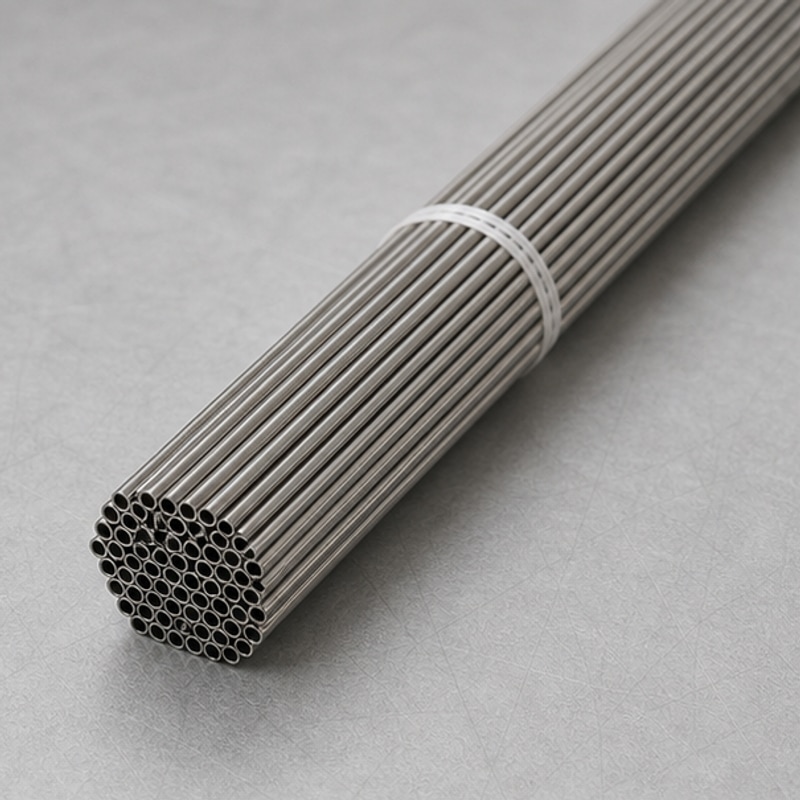
When medical device engineers and procurement teams need a stainless steel miniature tube that offers enhanced corrosion resistance over standard 316L, particularly in chloride-rich or acidic environments, the material grade specified is often 317L miniature tubing. This article addresses what 317L miniature tubing is, why it is selected over other austenitic grades, and the critical technical parameters—tolerances, surface finish, inspection documentation, and packaging—that must be defined in an RFQ to ensure the tubing meets the demands of precision medical and industrial applications.
Applicable Scenarios and Industries
317L miniature tubing is selected primarily for applications requiring superior resistance to pitting and crevice corrosion, especially where chlorides, sulfuric acid, or other aggressive media are present. Common scenarios include:
- Chemical injection and fluid handling systems in medical device manufacturing
- Sampling probes and sensor housings in analytical instruments
- Catheter components and guidewire lumens where corrosion resistance is critical
- Heat exchanger capillary bundles in pharmaceutical processing
- Marine and offshore instrumentation where saltwater exposure occurs
Industries that regularly specify 317L miniature tubing include medical device, pharmaceutical, biotechnology, analytical instrumentation, chemical processing, and aerospace fluid systems.
Material Grades and Designations
317L is a low-carbon austenitic stainless steel with molybdenum content higher than 316L, providing improved resistance to localized corrosion. Relevant standards and designations include:
- UNS S31703 – unified numbering system designation for 317L
- ASTM A269 – standard specification for seamless and welded austenitic stainless steel tubing for general service
- ASTM A213 – standard specification for seamless ferritic and austenitic alloy-steel boiler, superheater, and heat-exchanger tubes
- EN 10216-5 – European standard for seamless stainless steel tubes for pressure purposes
Typical chemical composition ranges for 317L (per ASTM A240) are:
| Element | Weight % (range) |
|---|---|
| Carbon (C) | 0.030 max |
| Manganese (Mn) | 2.00 max |
| Phosphorus (P) | 0.045 max |
| Sulfur (S) | 0.030 max |
| Silicon (Si) | 0.75 max |
| Chromium (Cr) | 18.0 – 20.0 |
| Nickel (Ni) | 11.0 – 15.0 |
| Molybdenum (Mo) | 3.0 – 4.0 |
| Nitrogen (N) | 0.10 max |
Compared to 316L (2.0–3.0% Mo), 317L’s higher molybdenum content significantly increases pitting resistance equivalent number (PREN). Mechanical properties (tensile strength, yield strength, elongation) depend on the product form, heat treatment condition, and applicable standard. For miniature tubing, typical tensile strength is 515 MPa minimum (per ASTM A269) with yield strength of 205 MPa minimum, but actual values depend on drawing condition and final temper.
OD, ID, Wall Thickness, and Length Considerations
For miniature tubing, outer diameter (OD) typically ranges from 0.5 mm to 6.35 mm (0.020″ to 0.250″), though smaller or larger dimensions may be available. Wall thickness is usually specified as a decimal dimension (e.g., 0.10 mm, 0.20 mm) or by gauge. Inner diameter (ID) is derived from OD minus twice the wall thickness, but can also be specified directly if the application requires a precise flow bore.
Lengths are commonly supplied in random mill lengths (typically 3–6 meters) or cut-to-length per drawing. For capillary applications, straightness requirements must be communicated; typical straightness is 1 mm per 1000 mm unless otherwise specified.
Tolerances
Tolerances for 317L miniature tubing are typically defined by the applicable standard or by customer drawing. Common ranges include:
| Parameter | Typical Tolerance Range |
|---|---|
| OD tolerance | ±0.05 mm to ±0.10 mm (for OD ≤ 6.35 mm) |
| Wall thickness tolerance | ±10% of nominal wall (for wall ≥ 0.10 mm) |
| ID tolerance | Derived from OD and wall tolerances, or specified directly |
| Length tolerance (cut pieces) | ±0.5 mm to ±1.0 mm (depending on length) |
| Straightness | 1 mm/m max (customizable) |
For tighter tolerances, capabilities depend on drawing, material condition, process route, and mutual agreement between parties.
End Condition and Burr Control
End condition is critical in miniature tubing, especially for capillary applications where a clean, burr-free end is required to prevent flow disruption, particle generation, or assembly issues. Common end conditions include:
- Square cut (cut-off wheel or saw)
- Deburred (internal and external edge radius typically ≤ 0.05 mm)
- Chamfered or bevelled (for welding or insertion)
- Custom profile per customer drawing
Burr control specifications should be stated on the drawing; a typical requirement is no visible burr under 10x magnification, or a maximum burr height of 0.02 mm.
Surface Finish and Cleanliness Requirements
Surface finish for 317L miniature tubing is typically specified as:
- Mill finish (annealed and pickled) – surface roughness Ra 0.8–1.6 µm
- Bright annealed – smoother surface, Ra ≤ 0.4 µm
- Electropolished – Ra ≤ 0.2 µm, passivated surface
Cleanliness requirements may include degreasing, ultrasonic cleaning, or packaging in a cleanroom environment. For medical device applications, tubing should be free of oil, grease, and particulate contamination. Specific cleanliness levels (e.g., ISO 14644 class) must be defined by the customer.
Inspection Documentation
Typical documentation provided with 317L miniature tubing includes:
- Material test certificate (MTC) per EN 10204 Type 3.1 or 3.2, showing chemical composition and mechanical properties
- Dimensional inspection report – OD, ID, wall thickness, length, straightness
- Surface finish measurement report (if specified)
- Burst or hydrostatic test report (if required)
- Certificate of conformance
All documentation must reference the applicable standard and customer purchase order number.
Packaging Considerations
Packaging for miniature tubing must prevent mechanical damage, corrosion, and contamination during transit. Common packaging methods include:
- Individual polybags or shrink wrap for cut lengths
- Foam-lined boxes or tubes for small-diameter coils
- Desiccant and VCI (vapor corrosion inhibitor) for long-term storage
- Cleanroom-compatible packaging (double-bagged, sealed) when specified
RFQ Information Checklist
To receive an accurate technical evaluation for 317L miniature tubing, include the following in your RFQ:
- Material grade (UNS S31703) and applicable standard (ASTM A269, A213, etc.)
- OD, ID, and wall thickness with tolerances
- Length (random or cut-to-length) with length tolerance
- End condition and burr control requirements
- Surface finish specification (Ra value and process)
- Cleanliness requirements
- Quantity (total length or number of pieces)
- Inspection documentation requirements (MTC type, dimensional report, etc.)
- Packaging and delivery requirements
To request a quotation for 317L miniature tubing, submit your drawings, material grade, quantity, tolerance, surface finish, and inspection requirements through the Healsmed website. The engineering team will review and respond with a technical evaluation.

Healsmed
Leading Stainless Steel Capillary Tube Factory. 1,400+ standard sizes IN STOCK & ready to ship worldwide! High precision, factory-direct price.