316Ti Thin Wall Capillary Tube: Material Properties, Manufacturing Tolerances, and Application Guide
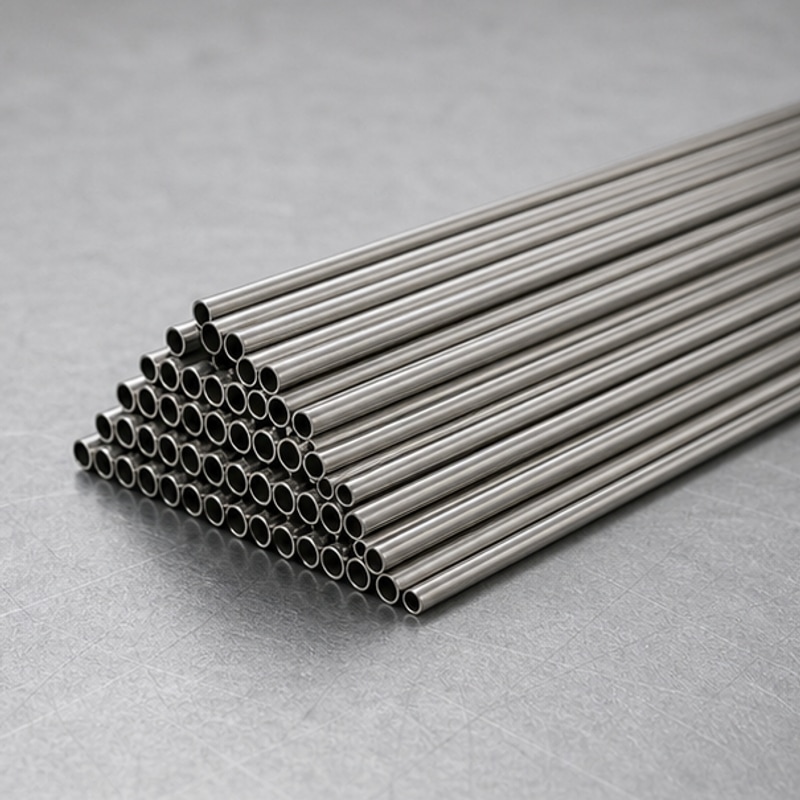
If you are sourcing 316Ti thin wall capillary tube for a medical device or analytical instrument application, you are likely balancing corrosion resistance requirements against the need to maintain tight dimensional control in small-bore geometries. Stabilized austenitic stainless steel grades such as 316Ti (UNS S31635) are specified when sensitization during welding or elevated-temperature service must be avoided, yet the thin wall cross-section introduces challenges in straightness, surface finish, and tolerance compliance. This article provides a technical overview of material properties, manufacturing tolerances, and procurement considerations for 316Ti thin wall capillary tube.
Applicable Scenarios and Industries
316Ti thin wall capillary tube is used where standard 316L may suffer from intergranular corrosion after welding or where service temperatures reach 425–900 °C (800–1650 °F). Typical applications include:
- Medical device components such as biopsy needles, catheter shafts, and fluid-delivery cannulae that require post-weld stabilization
- Analytical instrumentation (gas chromatography, mass spectrometry) where capillary dimensions must be maintained under thermal cycling
- Heat exchangers and thermocouple sheaths in chemical processing
- Pressure sensing lines and sample transfer tubes in pharmaceutical manufacturing
The titanium addition (nominally 5×%C to 0.70% max) forms stable carbides, preventing chromium carbide precipitation at grain boundaries. This makes 316Ti suitable for welded assemblies that cannot be solution-annealed after fabrication.
Material Grades and Designations
316Ti is covered under ASTM A269 (general-service seamless and welded tubing), ASTM A213 (seamless ferritic and austenitic boiler, superheater, and heat-exchanger tubes), and ASTM A249 (welded austenitic boiler tubes). The UNS designation is S31635. Equivalent EN standards include EN 10216-5 (seamless) and EN 10217-7 (welded) under material number 1.4571.
| Element | 316Ti (UNS S31635) – Typical Composition (wt%) |
|---|---|
| Carbon | ≤ 0.08 |
| Manganese | ≤ 2.00 |
| Phosphorus | ≤ 0.045 |
| Sulfur | ≤ 0.030 |
| Silicon | ≤ 1.00 |
| Chromium | 16.0 – 18.0 |
| Nickel | 10.0 – 14.0 |
| Molybdenum | 2.0 – 3.0 |
| Titanium | 5×%C – 0.70 |
Mechanical properties per ASTM A269 for annealed condition: tensile strength ≥ 515 MPa (75 ksi), yield strength ≥ 205 MPa (30 ksi), elongation ≥ 35% (50 mm gauge length). These values apply to tube sizes meeting the standard’s scope; thin wall products may exhibit slightly higher yield strengths due to cold work.
OD / ID / Wall Thickness / Length Considerations
Thin wall capillary tube is generally defined by an outside diameter (OD) of 0.5 mm to 6.35 mm (0.020 in to 0.250 in) with a wall thickness less than 10% of the OD. For 316Ti, the following dimensional ranges are commonly available:
- Outside diameter (OD): 0.5 mm – 6.35 mm
- Wall thickness: 0.05 mm – 0.5 mm (0.002 in – 0.020 in)
- Inside diameter (ID): Calculated as OD minus 2× wall thickness; critical for fluid flow and wire passage
- Length: Random mill lengths (1–6 m) or cut-to-length per drawing, typically ±0.5 mm for precision cuts
When specifying ID, note that thin wall tolerances are often asymmetric: the ID tolerance is derived from the OD and wall tolerances. If a tight ID is critical, it may be more efficient to specify ID tolerance directly and accept a wider OD range.
Tolerances
Tolerances for 316Ti thin wall capillary tube depend on the manufacturing process (seamless drawn, welded and drawn, or welded and cold-reduced) and the applicable standard.
| Parameter | Typical Tolerance Range | Standard Reference |
|---|---|---|
| OD (≤ 6.35 mm) | ±0.025 mm to ±0.050 mm | ASTM A269 / A213 |
| Wall thickness (≤ 0.5 mm) | ±10% of nominal | ASTM A269 |
| Length (cut-to-length) | ±0.5 mm | Per drawing |
| Straightness | 1 mm / 1000 mm (for annealed tube) | Industry practice |
| Ovality | Depends on OD/t ratio and process route; mutual agreement required | — |
For tighter tolerances (e.g., ±0.010 mm on OD), specify “precision drawn” or “hypodermic tube” tolerances. These are not covered by standard ASTM tables and must be negotiated with the supplier, with process capability demonstrated via statistical process control (SPC).
End Condition and Burr Control
Cut ends of 316Ti thin wall capillary tube must be deburred to prevent particle generation and flow obstruction. Common end conditions include:
- Square cut (90° ± 1°) with deburred ID and OD edges
- Chamfered end for easier lead-in during assembly
- No-burr cut (abrasive or laser) for medical device assemblies where particulate contamination is prohibited
Burr height limits should be specified on the drawing (e.g., ≤ 0.05 mm). For capillary ID below 0.5 mm, even a small burr can cause blockage; specify “burr-free per medical device assembly requirements”.
Surface Finish and Cleanliness Requirements
Surface finish for 316Ti thin wall capillary tube is typically specified as Ra (arithmetic average roughness). Common ranges:
- ID surface: Ra 0.2 – 0.8 µm (for fluid flow, minimal friction)
- OD surface: Ra 0.4 – 1.6 µm (as-drawn or pickled)
- Bright annealed: Ra ≤ 0.4 µm on OD if cosmetic appearance is required
Cleanliness requirements depend on the application. For medical devices, tube must be free of drawing lubricants, oils, and particulate. Specify “clean as per ISO 14971 residual risk assessment” or “ultrasonically cleaned and packaged in cleanroom environment” if needed. Do not assume standard tube is “medical grade” – cleanliness must be defined in the procurement specification.
Inspection Documentation
When ordering 316Ti thin wall capillary tube, request the following documentation to verify compliance:
- Material test report (MTR) per EN 10204 Type 3.1 or ASTM A1016 – includes chemical composition, mechanical properties, and heat number
- Dimensional inspection report – OD, ID, wall thickness, length, ovality, straightness
- Surface roughness measurement (if specified)
- Burr inspection report (microscope verification at cut ends)
- Certificate of conformance (CoC) – confirming compliance with the purchase order
For critical applications, third-party inspection (e.g., by a notified body or customer representative) may be specified.
Packaging Considerations
Thin wall capillary tube is susceptible to kinking, scratching, and contamination during transit. Packaging should include:
- Individual tube sleeves or spiral wrapping to prevent surface contact
- Foam-lined boxes or rigid tubes for lengths > 1 m
- Desiccant and vacuum-sealed bags for moisture-sensitive applications
- Cleanroom-compatible packaging if cleanliness is specified
Labeling must include material grade, heat number, dimensions, quantity, and purchase order reference.
RFQ Information Checklist
To obtain an accurate quotation for 316Ti thin wall capillary tube, include the following in your request:
- Drawing or dimensional specification (OD, ID, wall thickness, length)
- Material grade (316Ti / UNS S31635) and applicable standard (ASTM A269, A213, etc.)
- Quantity (total length or number of pieces)
- Tolerance requirements (OD, wall, length, straightness, ovality)
- End condition and burr control requirements
- Surface finish (Ra value, ID and OD)
- Cleanliness level and packaging requirements
- Inspection documentation required (MTR, dimensional report, etc.)
- Delivery timeline (if critical)
To request a quotation for 316Ti thin wall capillary tube, submit your drawings, material grade, quantity, tolerance, surface finish, and inspection requirements through the Healsmed website. The engineering team will review and respond with a technical evaluation.

Healsmed
Leading Stainless Steel Capillary Tube Factory. 1,400+ standard sizes IN STOCK & ready to ship worldwide! High precision, factory-direct price.