Stainless Steel Capillary Tube FAQ – 30 Common Questions Answered
Stainless Steel Capillary Tube FAQ – 30 Common Questions Answered
Whether you’re an engineer specifying capillary tubing for a new project, a procurement professional sourcing precision tubes, or a designer exploring material options, this FAQ answers the most common questions about stainless steel capillary tubes.
—
General Questions
1. What is a stainless steel capillary tube?
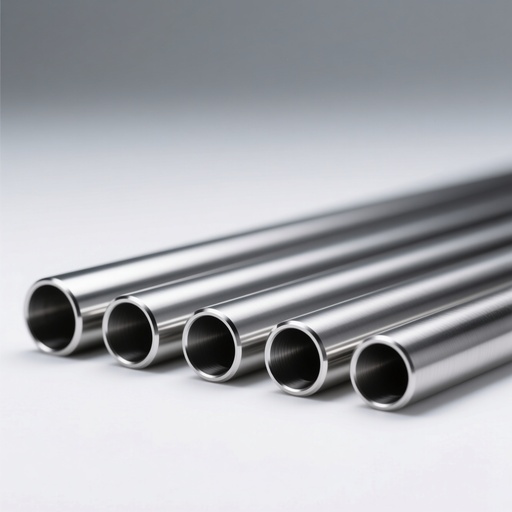
A stainless steel capillary tube is a precision-engineered tube with a small outer diameter, typically ranging from 0.30 mm to 12.00 mm. These tubes are manufactured to tight tolerances and are used for fluid transmission, structural components, sensors, and precision assemblies across multiple industries.
2. What is the difference between a capillary tube and a standard tube?
Capillary tubes are distinguished by their small diameter (typically ≤ 12 mm OD) and tight tolerance control (often ± 0.01 mm or better). Standard tubes typically have looser tolerances and larger diameters, making them unsuitable for precision applications where exact dimensions are critical.
3. What grades of stainless steel are available for capillary tubes?
The most common grades are 304 and 316L stainless steel. We also offer 304L, 316, 316LVM, 321, and various specialty alloys. 304 is the most cost-effective general-purpose grade, while 316L offers superior corrosion resistance with molybdenum content.
4. What is the smallest capillary tube diameter available?
The smallest standard capillary tube diameter we manufacture is 0.30 mm OD. Custom sizes down to 0.20 mm OD are available for specialized applications, subject to manufacturing feasibility review.
5. What is the maximum capillary tube diameter you offer?
Our standard capillary tube range extends up to 12.00 mm OD. For larger diameters, we can provide custom solutions based on your specific requirements.
—
Manufacturing & Quality
6. How are stainless steel capillary tubes manufactured?
Capillary tubes are typically manufactured through a cold drawing process. A larger tube (mother tube) is pulled through progressively smaller dies to achieve the final diameter and wall thickness. The process is followed by annealing to restore ductility and then straightening to meet straightness requirements.
7. What tolerances can you achieve on capillary tubes?
Our standard tolerance is ± 0.02 mm on OD. Precision tolerance (± 0.01 mm) and ultra-precision tolerance (± 0.005 mm) are available for applications requiring tighter dimensional control. ID tolerances and wall thickness tolerances follow proportional standards.
8. Can capillary tubes be cut to custom lengths?
Yes. We offer precision laser cutting for clean, burr-free cuts. Standard cut length tolerance is ± 0.5 mm, precision cuts achieve ± 0.1 mm, and ultra-precision laser cuts can achieve ± 0.01 mm for short lengths.
9. What is electropolishing and why is it used?
Electropolishing is an electrochemical process that removes a thin layer of material from the tube surface, creating a smooth, mirror-like finish (Ra ≤ 0.4 μm or better). It improves corrosion resistance, reduces surface contamination, and removes surface imperfections. Commonly specified for medical, pharmaceutical, and semiconductor applications.
10. How do you ensure burr-free tube ends?
We use laser cutting technology for clean tube ends with minimal burr formation (≤ 0.02 mm burr height). For applications requiring absolute burr-free ends, we offer secondary mechanical deburring and inspection processes.
11. What quality control tests do your tubes undergo?
Our quality control includes: dimensional inspection (micrometer, air gauge), surface finish measurement (profilometer), straightness verification, visual inspection under magnification, and material certification verification. For critical applications, we offer 100% inspection with detailed reports.
12. Are your tubes ASTM certified?
Yes. Our tubes are manufactured to comply with ASTM A269 and ASTM A213 standards. Material certifications (mill test reports) are available upon request.
—
Ordering & Specifications
13. How do I specify a capillary tube order?
Include the following information: Material grade, Outer Diameter (OD), Inner Diameter (ID) or Wall Thickness (WT), Length, Surface finish, Tolerance requirements, and Quantity. If unsure, our technical team can help you determine the correct specifications.
14. What is the minimum order quantity (MOQ)?
For standard sizes and materials, our MOQ is 100 meters. Smaller quantities are available for prototype samples and evaluation purposes. Contact us for specific quantity requirements.
15. What is the typical lead time for capillary tube orders?
Standard orders (standard sizes, standard tolerances) typically ship within 2-4 weeks. Precision tolerance orders may require 3-5 weeks. Custom sizes or specialty alloys may require 4-8 weeks depending on material availability and manufacturing complexity.
16. Can I order sample tubes for evaluation?
Yes. Sample tubes are available for evaluation. Contact us with your tube specifications and application details, and we can provide sample pieces (typically 100-300 mm length) for testing and validation.
17. What is the difference between seamless and welded capillary tubes?
Seamless tubes are made from a solid billet and drawn to size — no weld line, uniform structure, best for high-pressure and critical applications. Welded tubes are formed from strip and welded longitudinally — more economical, available in longer lengths, suitable for standard applications. Most capillary tubes under 6 mm OD are seamless.
18. Do you offer custom packaging?
Yes. We can package tubes in: individual sleeves, bundled packs, spool winding (for small-diameter flexible tubes), anti-static packaging, and custom labeling. Specify your packaging requirements with your order.
19. What lengths do you offer as standard?
Standard lengths are 1000 mm and 500 mm. Custom cut lengths from 10 mm to 2500 mm are available with laser cutting precision.
—
Applications & Selection
20. How do I choose between 304 and 316L for my application?
Choose 304 for general industrial applications, food processing, and cost-sensitive projects where corrosion resistance requirements are moderate. Choose 316L for applications involving chlorides, sea water, acids, medical devices, and environments where superior corrosion resistance is critical.
21. Can capillary tubes be bent or formed after purchase?
Yes. Stainless steel capillary tubes can be bent, formed, and machined using standard techniques. For applications requiring specific bend geometries, we recommend using annealed (soft) tubes and appropriate bending tools. We offer custom forming services for complex geometries.
22. What surface finishes are available?
We offer Bright Annealed (BA, Ra ≤ 0.8 μm), Electropolished (EP, Ra ≤ 0.4 μm), Mechanical Polish (Ra ≤ 0.2 μm), and Passivated surfaces. The choice depends on your application’s cleanliness, corrosion resistance, and aesthetic requirements.
23. Can you supply capillary tubes with inside diameters below 0.10 mm?
Yes. We can manufacture capillary tubes with ID as small as 0.05 mm (50 microns) for specialized applications such as microfluidics, fine-diameter needles, and precision analytical instruments.
24. Are capillary tubes suitable for high-temperature applications?
Yes. 304 stainless steel capillary tubes perform well up to 800°C in continuous service and 860°C in intermittent service. For higher temperatures, consider 321 or 310S stainless steel grades specifically designed for high-temperature applications.
25. What pressure ratings do capillary tubes have?
Pressure rating depends on tube diameter, wall thickness, and material grade. As a general guideline: a 2.10 mm OD × 0.15 mm WT 304 tube has a burst pressure of approximately 5,000 psi (34 MPa). Contact us with your specific dimensions for pressure calculations.
—
Technical Support
26. Do you provide material certifications?
Yes. Material certifications (mill test reports) are available for all orders upon request. Certifications include chemical composition analysis and mechanical property test results per ASTM standards.
27. Can you help with material selection?
Absolutely. Our technical team can review your application requirements and recommend the optimal material grade, tube dimensions, tolerance level, and surface finish for your specific use case.
28. What is the best way to contact your technical team?
Email is the most efficient way. Include your tube specifications and application details for the fastest response. We typically respond within 24 hours on business days.
29. Do you offer rush orders for urgent requirements?
Yes. For urgent requirements, we can prioritize your order with expedited manufacturing. Rush lead times depend on material availability, current production load, and tolerance requirements. Contact us with your timeline to discuss options.
30. What information should I include in a capillary tube RFQ?
For a complete quotation, include: Material grade, OD, ID or WT, Length, Quantity, Surface finish, Tolerance requirements, Application description, and Required delivery date. The more detailed your specifications, the more accurate your quotation will be.
—
Still Have Questions?
If your specific question isn’t covered in this FAQ, our technical support team is ready to help. Contact us with your query and we’ll get back to you with a detailed answer.
Related Resources:
- 304 vs 316L Stainless Steel Capillary Tubes Comparison Guide
- Stainless Steel Capillary Tube Size Chart
- Capillary Tube Applications Industry Guide
- Capillary Tube Machining Tolerances Guide

Healsmed
Leading Stainless Steel Capillary Tube Factory. 1,400+ standard sizes IN STOCK & ready to ship worldwide! High precision, factory-direct price.