347 Welded Capillary Tube: Material Properties, Manufacturing Tolerances, and Application Guide
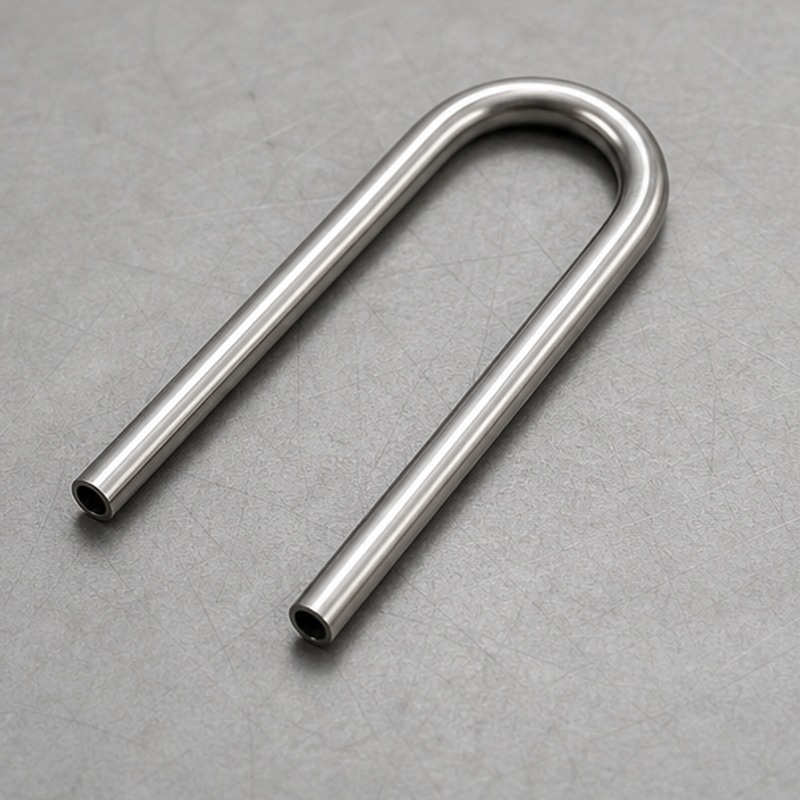
When your medical device or instrumentation design calls for a small-diameter tube that must resist intergranular corrosion in high-temperature service or after welding, the material selection narrows to stabilized austenitic grades. 347 welded capillary tube addresses this exact problem: it provides a weldable stainless steel tube in outer diameters typically under 6.35 mm (0.250 in) that retains corrosion resistance in the heat-affected zone without requiring post-weld heat treatment. Engineers and procurement specialists sourcing 347 welded capillary tube are looking for verified material traceability, tight dimensional control, and a reliable supply chain that can deliver the stabilised chemistry of niobium and tantalum.
Applicable Scenarios and Industries
347 welded capillary tube is specified where service temperatures exceed the sensitisation range of standard 304 or 316L (approximately 425–870 °C). Typical applications include:
- Thermowells and sensor probes in chemical processing and refinery instrumentation
- Capillary lines for hydraulic or pneumatic control systems in high-temperature environments
- Medical device components that require sterilisation cycles (autoclave) at elevated temperatures
- Oil and gas wellhead instrumentation where sour service combined with high temperature demands a stabilised grade
- Heat exchangers and boiler instrumentation where intermittent heating could cause carbide precipitation in unstabilised grades
Industries that commonly use 347 welded capillary tube include petrochemical, power generation, aerospace, and medical device manufacturing.
Material Grade Designations and Key Properties
347 is a niobium-stabilised austenitic stainless steel. Its nominal composition per ASTM A269 and ASTM A249 (welded tube) is:
| Element | Composition (%) |
|---|---|
| Carbon | 0.08 max |
| Manganese | 2.00 max |
| Silicon | 1.00 max |
| Phosphorus | 0.045 max |
| Sulfur | 0.030 max |
| Chromium | 17.0–19.0 |
| Nickel | 9.0–13.0 |
| Niobium + Tantalum | 10 × C minimum, 1.00 max |
Mechanical properties in the annealed condition (typical for welded capillary tube) per ASTM A269: tensile strength 515 MPa (75 ksi) min, yield strength 205 MPa (30 ksi) min, elongation 35% min. The niobium addition prevents chromium carbide precipitation during welding or high-temperature exposure, giving 347 better intergranular corrosion resistance than 304 or 321 in the as-welded condition.
Comparison with Related Grades
321 (titanium-stabilised) is also used for high-temperature capillary tubing, but 347 offers higher creep strength above 540 °C and is preferred when the welded tube must undergo repeated thermal cycling. For non-stabilised applications where sensitisation is not a concern, 304 or 316L may be more economical.
OD / ID / Wall Thickness / Length Considerations
Capillary tube is defined by small outer diameters. For 347 welded capillary tube, common outer diameter (OD) dimensions range from 0.75 mm to 6.35 mm (0.030 in to 0.250 in). Wall thickness typically ranges from 0.10 mm to 1.00 mm (0.004 in to 0.040 in). The inner diameter (ID) is derived from OD minus 2× wall. Lengths can be supplied in cut-to-length pieces (e.g., 300 mm to 6 m) or coiled, depending on the application and quantity.
When specifying, indicate whether the tube is intended for use as a capillary (pressure/flow) or as a structural component. The ID tolerance directly affects flow rate consistency, so tight ID control is critical in many medical and instrumentation designs.
Tolerances – Typical Ranges for Capillary Tube
Dimensional tolerances for 347 welded capillary tube depend on the applicable standard and on mutual agreement between the buyer and supplier. Common requirements:
| Parameter | Typical Tolerance | Condition |
|---|---|---|
| OD | ±0.05 mm (±0.002 in) for OD ≤ 3.2 mm ±0.10 mm (±0.004 in) for OD > 3.2 mm |
Per ASTM A249 or customer specification |
| Wall thickness | ±10% of nominal | Measured at any cross-section |
| Length (cut pieces) | +1 mm / -0 mm, or as agreed | Typical for fixed lengths |
| Straightness | 1.0 mm per 1 m max | For straight cut lengths |
For tighter tolerances (e.g., ±0.025 mm on OD), specify clearly on the drawing. Tolerances are not inherent to the material grade but are manufacturing capabilities that must be verified with each supplier.
End Condition and Burr Control
Welded capillary tube is typically supplied with ends cut square (90° to axis). Burr control is critical for applications where the tube end must seal against a ferrule or be welded into a manifold. Maximum allowable burr height is often specified as 0.10 mm (0.004 in) or less. Deburring methods include mechanical brushing, abrasive wheel, or vibratory finishing. For medical or clean applications, electropolished or passivated ends may be required to remove microscopic burrs and improve cleanability.
Surface Finish and Cleanliness Requirements
Surface finish for 347 welded capillary tube is typically specified as the arithmetic average roughness (Ra). Common finishes:
- As-welded: Ra 0.8–1.6 µm (32–63 µin) typical on OD
- Bright annealed: Ra ≤ 0.4 µm (16 µin) possible with controlled atmosphere
- Electropolished: Ra ≤ 0.2 µm (8 µin) for medical and ultra-clean service
Cleanliness requirements involve removal of welding oxides, lubricants, and particulate. For medical device applications, tubes may be cleaned to a specified particle count or organic residue level (e.g., < 0.1 mg per tube). Suppliers can provide cleaning certificates if required.
Inspection Documentation
When sourcing 347 welded capillary tube, typical documentation includes:
- Material test report (MTR / EN 10204 3.1 or 3.2) certifying chemical composition and mechanical properties
- Dimensional inspection report showing OD, ID, wall, length, and ovality measurements
- Surface finish measurement (Ra) if specified
- Hydrostatic or air pressure test certificate (per ASTM A249, if required)
- Burr inspection report
All documentation should reference the applicable ASTM or EN standard (e.g., ASTM A249, ASTM A269, EN 10216-5) and the customer drawing revision.
Packaging Considerations
347 welded capillary tube is often shipped in plastic sleeves or individual packaging to preserve surface finish and prevent scratches. For cut lengths, bundling with interleaving material and end caps is common. Coiled tubing may be wound on spools with controlled tension. For medical devices, cleanroom-compatible packaging and double bagging can be requested. Ensure packaging prevents corrosion during transit – a desiccant pack may be added for long-term storage.
RFQ Information Checklist
To receive an accurate quotation for 347 welded capillary tube, provide the following details:
- Outer diameter (OD) and tolerance
- Inner diameter (ID) or wall thickness and tolerance
- Length (cut-to-length or coil length)
- Quantity (pieces or meters)
- Material grade: 347 per ASTM A249 or equivalent
- Surface finish requirement (Ra value)
- End condition and burr limit
- Cleanliness specification
- Documentation requirements (MTR, dimensional report, etc.)
- Specific drawing or reference standard
Get a quote for 347 welded capillary tube. Submit your drawing, material grade, quantity, tolerance, surface finish, and inspection requirements through the Healsmed website. The engineering team will review and respond with a technical evaluation.

Healsmed
Leading Stainless Steel Capillary Tube Factory. 1,400+ standard sizes IN STOCK & ready to ship worldwide! High precision, factory-direct price.